
Is My Electrical Panel Too Old for Modern Appliances in Greensboro?
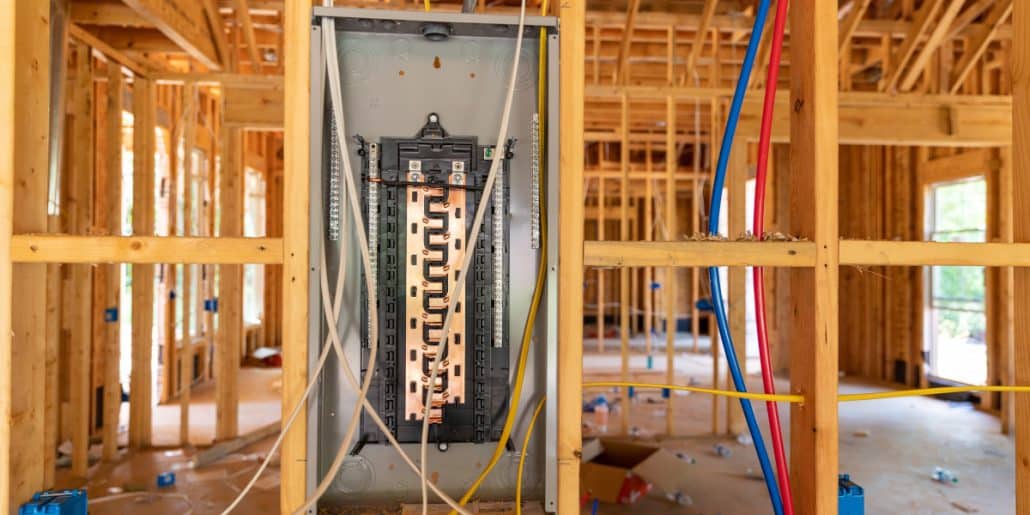
 Yes, an electrical panel may be too old for modern appliances if it is more than 30 to 40 years old, rated at 100 amps or less, or showing signs of overloading, such as frequent breaker trips, flickering lights, or circuit space that has run out. If you live in an older home in the Greensboro area, you likely have an older electrical panel. Do you need an electrical panel upgrade in Greensboro to handle today’s appliances? Here’s the reality of the situation.
Greensboro has a significant share of homes built before the 1970s, particularly in established neighborhoods like Kirkwood, Fisher Park, Dunleath, Sedgefield, Starmount, Irving Park, and the Brice Street area. Many of those homes were wired for a fraction of the electrical load that modern households run. Understanding what kind of panel you have, and what its limitations are, is the first step toward knowing whether an upgrade belongs on your project list.
Do You Have a Fuse Box or a Breaker Panel?
Fuse boxes were standard in homes built before the 1960s, while the transition to circuit breaker panels was nearly complete by the mid-1970s, and a home that still has its original fuse box is a strong candidate for an upgrade, regardless of whether problems have appeared yet.
The distinction matters because fuse boxes and breaker panels respond to electrical faults differently. A circuit breaker trips and can be reset. A fuse blows and must be replaced. More importantly, older fuse boxes were designed for much lower amperage loads than what modern homes draw, and their age alone creates a safety concern that goes beyond simple capacity. If you open your electrical panel and see glass fuses rather than rows of switches, that is a fuse box rather than a circuit breaker panel, upgrading it should be a priority.
For homes built between the 1960s and 1990s in Greensboro, a circuit breaker panel is likely already in place. The question for those homes is whether the panel’s amperage rating and physical capacity are sufficient for today’s electrical loads, and whether the panel brand itself presents a safety concern.
An Old Electrical Panel Can Be a Problem
It is true that an older electrical panel can struggle to safely support modern appliances. Older homes were generally designed to meet far lower electrical demands than what today’s households require. Using the old panel with modern appliances and electronics can lead to overloaded circuits, tripped breakers, poor performance, and increased fire risk.
The amperage difference tells the story clearly. A 100-amp panel was considered adequate for a home in the 1960s, when the typical household ran a refrigerator, a few lights, and a television. A modern home running central HVAC, multiple refrigerators, a washer and dryer, a dishwasher, multiple home office setups, and an EV charger can easily require 200 amps of service capacity. The panel that handled the original load simply was not designed for what sits in today’s kitchen, garage, and home office.
Should You Be Concerned About Federal Pacific or Zinsco Panels?
Federal Pacific Electric Stab-Lok panels and Zinsco panels, both of which were installed in many Greensboro homes built between the 1950s and 1980s, have well-documented records of breakers that fail to trip under fault conditions, which represents a serious fire risk and warrants replacement regardless of whether problems have been noticed.
These are not simply old panels that have reached the end of their useful life. They are panels with a specific design defect that causes them to behave unreliably under the conditions they were designed to handle. A Federal Pacific Stab-Lok breaker may not trip during an overload, allowing current to continue flowing into overheated wiring. If you open your panel and see the Federal Pacific or Zinsco brand name on the interior, scheduling an inspection and replacement should be treated as urgent.
Berico’s licensed electricians are familiar with both panel types and see them regularly in Greensboro homes from that era. Identifying the panel brand is one of the first things an electrician checks during an electrical inspection, and it is the kind of local field knowledge that makes a difference in a market with as much older housing stock as Guilford County.
A Number of Issues Are Possible with an Aging Panel
An aging electrical panel in a Greensboro home may present with limited capacity, frequent breaker trips, insufficient circuit space for new additions, and missing modern safety protections, any of which can affect both the safety and the performance of the home’s entire electrical system.
What might you encounter specifically when trying to use an old panel to manage a modern home? The following list is a starting point.
- Limited capacity. In older homes, there were far fewer appliances plugged into the wall than what is common with modern living. As a result, those panels had a lower capacity and might not be ready to withstand what is expected today. A 100-amp panel serving a home that now draws 150 or more amps of continuous load is operating in a chronic overload condition, even if individual breakers are not tripping.
- Frequent breaker trips. This is a likely sign that your panel is overloaded or is struggling to effectively distribute power to everything that is demanding it at the same time. If multiple breakers trip on a regular basis across different circuits, the problem is the panel’s total capacity rather than any individual circuit.
- Insufficient circuit space. You might encounter a situation where you can’t add something that you want, such as an EV charger, because there isn’t enough space on the panel for it to be included. A Level 2 EV charger requires a dedicated double-pole 50-amp breaker, which takes up two slots. An older 100-amp panel with a full complement of breakers often has no slots available for additions like this.
- Missing safety protections. Even if everything is working as it should, your aging electrical panel might not be up to modern safety standards, meaning you will be putting yourself and your family at unnecessary risk. The 2023 NEC now requires AFCI breakers in most living areas to protect against arc faults, and GFCI protection in all wet areas. Older panels were installed without these requirements and cannot accommodate them without upgrades.
The Growing Demand for Power in Modern Greensboro Homes
Modern Greensboro homes draw substantially more electrical power than the panels in older homes were designed to supply, driven by increases in large appliances, home office equipment, smart home systems, and the growing adoption of electric vehicles that require dedicated high-amperage charging circuits.
If you think about it for a moment, the increased power demands of modern homes are rather obvious. There are simply many more powered items in the average home than there were a couple of generations ago. The list is long, including large televisions, gaming systems, home office equipment, smart devices, EV chargers, and more. Life has changed dramatically, and an old electrical panel simply would not have been designed with these changes in mind.
The practical consequence of this gap is that a panel running near its maximum capacity operates under chronic stress. Wiring runs hotter than it should, connections at breaker terminals experience repeated thermal cycling, and the panel itself ages faster than it would under normal load conditions. An upgrade to 200-amp or even 400-amp service removes that stress and gives the home room to grow without running into capacity limits every time a new appliance or circuit is added.
“In Greensboro, a large portion of our panel upgrade calls come from homes where the homeowner wanted to add an EV charger or a home addition and found out the panel was completely full. Once we open it up, we often find it’s also a 100-amp panel that has been running a 21st-century home on mid-20th-century infrastructure. The upgrade usually solves three problems at once: it creates the space they need, brings the amperage up to where it should be, and replaces a panel that may have been living on borrowed time.”
Toni Mortera, Expert Electrician, Berico
When to Consider a Breaker Panel Replacement in Greensboro
A breaker panel replacement in Greensboro should be considered when the panel is more than 30 to 40 years old, when it is rated at 100 amps or less, when it carries a Federal Pacific or Zinsco brand name, or when a planned renovation or addition will require new circuits the current panel cannot accommodate.
If you are regularly experiencing problems with your electrical panel, it’s relatively obvious that something needs to be done. But you don’t even have to be facing problems just yet to think about replacing the current panel with a new one. If your panel is more than 30 to 40 years old, opting for an upgrade would be a wise investment in performance and safety. Also, if you have an upcoming home renovation planned, including a new panel in that project would make it easier to support any new features or appliances you’ll be adding.
What Does an Electrical Panel Upgrade in Greensboro Involve?
An electrical panel upgrade in Greensboro involves replacing the existing panel with a higher-capacity unit, typically upgrading from 100-amp to 200-amp service, coordinating with the utility for meter access, and pulling the required Guilford County electrical permit before any work begins.
An electrical panel upgrade in Greensboro involves replacing the existing panel with a higher-capacity unit, typically upgrading from 100-amp to 200-amp service, coordinating with the utility for meter access, and pulling the required electrical permit from the appropriate local jurisdiction before any work begins.
Berico’s licensed electricians manage the entire process from start to finish. That includes the utility coordination required when the meter needs to be pulled, pulling the electrical permit from the correct jurisdiction, whether that is the City of Greensboro, the City of High Point, or Guilford County, depending on where the home is located, completing the panel replacement and reconnecting all circuits correctly, and scheduling the required electrical inspection before power is restored. For most Greensboro homeowners, the panel replacement itself is completed in a single day. The permitting and inspection timeline runs on a separate schedule, but Berico handles all of that coordination so the homeowner does not need to manage it independently.
In North Carolina, electrical panel upgrades require a permit and a final inspection by a licensed electrical inspector before the new panel can be energized. Work done without a permit creates a safety risk and can cause complications during a home sale or an insurance claim. This is not a DIY project, and it is not a job for an unlicensed handyman.
Upgrade Safety and Performance with Berico’s Greensboro Electricians
Calling a Greensboro electrician about a breaker panel replacement is about both safety and performance. First and foremost, you’ll greatly reduce your fire risk with a new panel, and you will deal with far fewer tripped breakers along the way. For more information about this important project, reach out to the Berico team today.
Berico has been Greensboro’s trusted home comfort provider since 1924, and the company’s licensed electricians bring that same commitment to quality and dependability to every panel upgrade project. Greensboro’s housing stock spans every era, from pre-war properties with fuse boxes to mid-century homes with undersized breaker panels to newer construction that simply needs additional capacity, and Berico’s electricians are equipped to assess and upgrade all of them. The team is familiar with the panel types, the wiring generations, and the local permitting process specific to this market. If you are ready to find out what your panel situation looks like, Berico can assess it and give you a clear path forward.
Frequently Asked Questions About Electrical Panel Upgrades in Greensboro
How do I know if my electrical panel is too small?
A panel rated at 100 amps or less is likely undersized for a modern household that runs central HVAC, multiple major appliances, home office equipment, and high-draw devices simultaneously. Signs that the panel is struggling include frequent breaker trips on multiple circuits, lights that dim when large appliances start, and a panel that has no available slots for new breakers. A licensed electrician can assess the panel’s current load versus its rated capacity and give you a definitive answer.
What is the difference between a fuse box and a circuit breaker panel?
A fuse box uses replaceable glass or cartridge fuses that physically burn out when a circuit overloads. A circuit breaker panel uses mechanical switches that trip under overload and can be reset. Fuse boxes were standard in homes built before the 1960s and are significantly less capable of handling modern electrical loads. Homes in older Greensboro neighborhoods that still have their original fuse boxes should prioritize upgrading to a modern circuit breaker panel.
Do I need a permit to upgrade my electrical panel in North Carolina?
Yes. Electrical panel upgrades in North Carolina require a permit and a final inspection by a licensed electrical inspector before the new panel can be energized. Guilford County enforces this requirement for residential panel replacements. Berico’s licensed electricians pull the permit and manage the inspection scheduling as part of every panel upgrade project, so the homeowner does not have to navigate that process independently.
How long does an electrical panel upgrade take?
For most Greensboro homes, the physical panel replacement is completed in a single day. The permitting and inspection process runs on a separate timeline that depends on Guilford County’s scheduling. Berico handles all utility coordination and permit management, so the homeowner’s role is simply to be available on the installation day and to allow access for the follow-up inspection.