

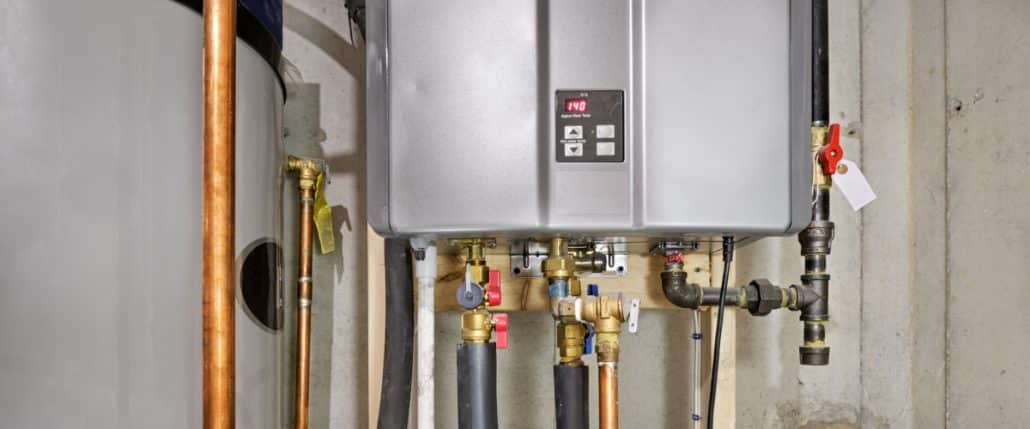
Why Is There Water Around the Base of My Water Heater?
 Water around the base of a water heater is most commonly caused by a loose plumbing connection, a faulty drain valve, a pressure relief valve discharge, condensation, or internal tank corrosion, and the urgency of the fix depends on which cause is responsible. It’s an alarming sight to see water pooling around the base of your water heater. You may need to call a local plumber to solve this problem, but first, why is it happening, and what fix might be required?
The age of your water heater is one of the most important early factors to consider. Traditional tank water heaters typically last 8 to 12 years. If your unit is within that range or beyond it, water at the base shifts the conversation quickly from repair to replacement. If the heater is newer, the cause is more likely a valve or connection issue that can be addressed without replacing the unit.
The Reasons Why You May Have Water Around Your Water Heater
Water around the base of your water heater can have many causes. Some of these issues can be relatively minor and require only a quick fix, while others indicate that your water heater is nearing the end of its useful life.
- Loose plumbing connections. Water supply lines that are connected to the heater can loosen over time and allow small leaks to develop. It may require nothing more than tightening up the connection to stop the leak and resolve this issue.
- Faulty drain valve. There is typically a drain valve located near the bottom of a water heater. If that valve gets damaged, wears out, or just isn’t fully closed, it can also allow water to accumulate on the floor.
- Pressure relief valve problems. This is a critical safety feature on all water heaters, but it can also be the source of a leak. As pressure builds in the tank, you might notice that small drips of water begin to sneak out of the valve.
- Condensation buildup. Sometimes, the water won’t be coming from the inside of the tank at all. If it is particularly humid, you might simply have condensation building up on the tank and then dripping down onto the floor. Greensboro’s summer humidity levels are high enough that this is a genuine seasonal cause, particularly in basements and utility rooms with limited airflow. If condensation on pipes and appliances is a recurring issue in your home, Berico’s guide to fixing home humidity problems covers the HVAC-based solutions that address the root cause.
- Internal corrosion. This is one of the most serious issues that you can face. An older water heater may have started to rust internally, leading to leaks or cracks in the tank itself.
What Does a Leaking Pressure Relief Valve Mean?
A leaking temperature and pressure relief valve, commonly called a T&P valve, can indicate that the water inside the tank has reached a dangerously high temperature or pressure level, which is a safety warning that requires immediate professional attention rather than a simple repair.
The T&P valve is a required safety component on every water heater. Its job is to release water if temperature or pressure inside the tank exceeds safe limits. A properly functioning T&P valve that opens occasionally under normal conditions will discharge water through a dedicated discharge pipe that routes to a floor drain or to the exterior of the home. If water is pooling at the base of the heater and the discharge pipe appears to be the source, that is a more urgent situation than a loose supply line connection.
A T&P valve that is constantly dripping or discharging may indicate that the valve itself has failed and needs to be replaced, or it may indicate that temperature or pressure inside the tank is consistently running too high. Either scenario warrants a call to a licensed plumber. Running a water heater with a faulty or bypassed T&P valve is a serious safety hazard.
What Is an Anode Rod and How Does It Relate to Corrosion?
An anode rod is a sacrificial metal rod inside the water heater tank that attracts the corrosive elements in the water supply, protecting the tank walls from rust, and when the rod is fully depleted, internal corrosion accelerates, and the tank itself begins to deteriorate.
Most tank water heaters have a magnesium or aluminum anode rod suspended inside the tank. As long as the rod is intact, it corrodes preferentially instead of the tank lining. Once the rod is depleted, the tank walls become vulnerable. This is why internal corrosion is more common in older heaters and in situations where the anode rod has never been inspected or replaced.
Greensboro’s municipal water supply is classified as soft to mildly hard, typically measuring around 2 to 3 grains per gallon. While that is not aggressively hard water, it still contains dissolved minerals that gradually break down anode rod material over time. A water heater that has been in service for 8 or more years without an anode rod inspection may have a depleted rod, leaving the tank exposed to internal rust. Rusty or discolored hot water from your taps is often the first visible sign that this process is underway.
“In Greensboro, the calls we get most often on leaking water heaters fall into two categories: either it’s a valve issue on a heater that still has years of life left, or it’s a tank that’s been slowly corroding and finally gave way. The T&P valve situation is the one that concerns me most when a homeowner describes it as ‘just a small drip.’ That valve is there for a reason, and water coming out of it is the heater telling you something is wrong with the pressure or temperature inside. That is not something to watch and wait on.”
Adam Rhodes ,Expert Plumber, Berico
When Should You Turn Off the Water and Call Immediately?
Turn off the cold water supply to the water heater and call a plumber immediately if you see water actively flowing from the T&P valve discharge pipe, if the tank is visibly cracked or bulging, if the water has a rust color or metallic smell, or if the floor around the heater is saturated.
To shut off the water supply to the heater, locate the cold water inlet valve on the pipe leading into the top of the unit and turn it clockwise until it stops. For a gas water heater, set the thermostat dial to the pilot position rather than turning the gas off entirely. For an electric unit, switch off the dedicated circuit breaker. These steps will stop the leak from worsening while you wait for a plumber to arrive.
Berico’s licensed plumbers serve Greensboro and surrounding areas and are available for emergency plumbing calls. Do not attempt to bypass or remove a T&P valve to stop a discharge. The valve is a safety device, and its removal creates a serious hazard.
Should You Repair or Replace a Leaking Water Heater?
Whether to repair or replace a leaking water heater depends primarily on the age of the unit, the source of the leak, and whether internal corrosion is present, with tank heaters older than 10 years and any heater with a cracked or corroded tank almost always being better candidates for replacement than repair.
A loose supply line or a faulty drain valve on a heater that is 5 years old is almost always worth repairing. The heater has significant remaining service life, and the repair is straightforward. A tank heater that is 12 years old with rust-colored water and water pooling at the base is almost certainly beyond cost-effective repair. The internal corrosion that has reached the point of visible leakage is progressive, and replacing one leaking seam does not address the underlying deterioration throughout the tank.
A licensed plumber can assess which category your situation falls into during a diagnostic visit. Berico’s plumbers handle water heater repair and water heater replacement for all types, including gas, electric, and tankless systems, and can evaluate your specific unit to give you a clear recommendation.
Never Ignore a Leaking Water Heater
Even a minor water heater leak that appears stable will almost always worsen over time, and the consequences of ignoring it range from water damage and mold growth to a complete tank failure that leaves the home without hot water entirely.
Even if the problem doesn’t seem like a big deal at the moment, you certainly don’t want to ignore it. Minor leaks are likely to get worse over time, and you could soon be dealing with water damage or mold growth in your home. You may even be headed for complete equipment failure and a hot water outage until you can have the unit repaired or replaced. Always take this situation seriously and get help with the problem before things get worse.
Is a Tankless Water Heater Worth Considering?
A leaking or failing tank water heater is one of the most practical moments to consider switching to a tankless water heater, which heats water on demand rather than maintaining a stored tank, eliminating the risk of tank corrosion and reducing standby energy loss.
Tankless water heaters do not store water, which means there is no tank to corrode, crack, or leak at the base. For Greensboro homeowners who have dealt with repeated water heater issues or who are facing their second replacement in 10 to 15 years, the switch to a tankless system addresses the root of the problem rather than repeating the same replacement cycle.
Tankless systems also last significantly longer than tank heaters. Where a traditional tank heater has an 8 to 12 year lifespan, a tankless unit with proper maintenance can last up to 20 years. The upfront investment is higher, but the extended service life and reduced energy consumption, tankless systems eliminate the standby heat loss that occurs when a tank keeps water warm around the clock and change the long-term math considerably.
Get Help from Berico’s Greensboro Plumbers Today
It’s possible that you will be able to have your current water heater repaired to solve this issue, or you might opt for a water heater replacement. Potentially, you’ll use this opportunity to switch to a tankless water heater. Whatever the case, your first move should be to call Berico to explain the problem and schedule an appointment. Professional help is just a phone call away.
Berico has served Greensboro and surrounding areas since 1924. The team’s licensed plumbers handle water heater diagnostics, repair, and replacement for all types of systems, and can assess whether your current unit is worth repairing or whether the situation is the right moment to upgrade to a more efficient, longer-lasting solution.
Frequently Asked Questions About Water Around a Water Heater
Is it dangerous if water is leaking from the bottom of my water heater?
It can be, depending on the source. A loose drain valve or supply line connection is less immediately dangerous but should still be addressed promptly. Water coming from the T&P valve discharge pipe is a more serious warning, as it may indicate dangerously high pressure or temperature inside the tank. Any active leak that is worsening warrants a same-day call to a licensed plumber.
Can a leaking water heater be repaired?
Yes, in many cases. Leaks from loose connections, a faulty drain valve, or a failed T&P valve can often be repaired without replacing the entire unit, provided the tank itself is structurally sound and within its useful service life. A tank that is leaking due to internal corrosion or a crack in the tank wall cannot be repaired cost-effectively and should be replaced.
How long does a water heater typically last?
Traditional tank water heaters typically last 8 to 12 years with normal use and maintenance. Tankless water heaters can last up to 20 years with proper maintenance. A water heater that is approaching or past the 10-year mark and showing signs of corrosion or leaking is generally a better candidate for replacement than repair.
What causes a water heater to corrode internally?
Internal water heater corrosion is primarily caused by the depletion of the anode rod, a sacrificial metal component inside the tank that attracts corrosive elements in the water supply. Once the anode rod is fully consumed, the tank walls become vulnerable to rust. Regular inspection and replacement of the anode rod is the most effective preventive measure against internal tank corrosion.