

Why Is My AC Running But Not Cooling My Greensboro Home?
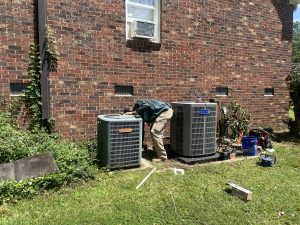 An AC running without cooling typically indicates one of seven common problems: a dirty air filter restricting airflow, frozen evaporator coils, low refrigerant from a leak, a blocked outdoor condenser unit, thermostat malfunction, compressor failure, or ductwork leaks. Understanding which problem affects your system helps you take the right action quickly.
When your air conditioner comes on, you naturally expect cold air to flow. But what if that doesn’t happen? A few underlying causes can be to blame for this frustrating situation. Some issues you can address yourself with simple maintenance, while others require professional air conditioning repair to diagnose and fix safely. Knowing the difference prevents wasted time on DIY attempts when professional help is actually needed.
How Does an Air Conditioner Actually Cool Your Home?
Understanding how your AC works helps you recognize what goes wrong when it runs without cooling. Air conditioners don’t create cold air. Instead, they remove heat and humidity from indoor air and transfer it outside, leaving cooler, drier air behind.
The process involves refrigerant circulating through a closed loop between your indoor evaporator coil and outdoor condenser unit. Inside your home, warm air passes over the cold evaporator coil, where refrigerant absorbs heat. The refrigerant then travels to the outdoor unit, where it releases that heat and returns inside to repeat the cycle.
This continuous process requires proper airflow across both coils, adequate refrigerant levels, functioning mechanical components, and correct system operation. When any part of this system fails or operates inefficiently, your AC runs without producing the cooling you need.
What Are the Most Common Reasons Your AC Won’t Cool?
Air conditioners will struggle to produce cool air when they have restricted airflow, low refrigerant levels, or thermostat problems, among other issues. Some of these breakdowns can be solved relatively easily, while others require professional repairs from an experienced Greensboro HVAC repair technician.
Dirty Air Filter
This one is extremely common and accounts for a significant percentage of cooling complaints during Greensboro summers. If you fail to change out the filter in your air conditioner, that dirty filter will restrict airflow through the system. As a result, it will be hard for the AC unit to produce the cool air you are used to.
Air filters trap dust, pollen, pet dander, and other airborne particles before they enter your AC system. During Greensboro’s high-pollen spring and summer months, filters clog faster than in areas with less vegetation and lower pollen counts. A clogged filter forces your system to work much harder while delivering much less cooling.
This is a simple fix, as you just need to swap out the old filter for a new one, and the AC unit will start to breathe freely once again. Most residential systems use filters that should be changed every 30 to 90 days depending on household conditions. Homes with pets, smokers, or allergy sufferers need more frequent changes, potentially every 30 days during peak usage months.
Frozen Evaporator Coils
Frozen evaporator coils are one of the most common causes of AC running without cooling, yet many homeowners don’t realize their system has this problem. When airflow across the indoor coil becomes restricted, the coil gets too cold, and frost or ice builds up on the copper lines and coil fins.
Restricted airflow from dirty filters, closed vents, or blocked return air grilles causes the coil temperature to drop below freezing. As moisture in the air contacts the extremely cold coil, it freezes solid, creating an insulating layer of ice that prevents heat absorption. Your AC runs continuously but can’t remove heat from your home because ice blocks the heat exchange process.
You can identify frozen coils by checking your indoor unit. If you see ice accumulation on the copper refrigerant lines or the coil itself, your system has frozen. You might also notice reduced airflow from vents, water dripping from the indoor unit as ice melts, or unusual hissing sounds.
To address frozen coils, turn off your AC and let the ice melt completely, which can take several hours. Once melted, check and replace your air filter, ensure all vents are open, and verify nothing blocks your return air grilles. If the problem returns after these steps, you likely need professional service to address refrigerant levels or mechanical issues causing the freeze.
Low Refrigerant Levels
The refrigerant in your air conditioner is within a closed system. That means it shouldn’t run low unless there is a leak. Refrigerant doesn’t get “used up” like fuel in a car. If your system is low on refrigerant, something has allowed it to escape.
So, if you suspect that the refrigerant is low, having the system professionally inspected to find and fix the leak is an urgent matter. Simply adding more refrigerant without repairing the leak wastes money and allows the problem to continue. Professional HVAC technicians use specialized equipment to locate leaks, repair them properly, and recharge the system to manufacturer specifications.
Signs of low refrigerant include ice on the outdoor unit’s copper lines, hissing or bubbling sounds near the refrigerant lines, AC running constantly without reaching the set temperature, and noticeably warm air from vents. Your outdoor unit might run but fail to remove heat effectively when refrigerant levels drop too low.
According to Josh Longley from Berico, “Low refrigerant is never normal and always indicates a leak somewhere in the system. We see this frequently in older systems or after poor installation work. The most important step is finding and fixing the leak before adding refrigerant. Otherwise, you’re just throwing money away as it leaks out again.”
Blocked or Dirty Outdoor Unit
When your air conditioner is working well, it “dumps” warm air from inside your house to the outside through the condenser unit. However, the outdoor unit needs plenty of open air around it to make that system work effectively. If the outdoor unit is clogged up or blocked by things like debris, leaves, or even grass clippings, cooling performance is sure to suffer.
The outdoor condenser coil can become caked with dirt, cottonwood seeds, grass clippings, and other debris that restricts airflow. When air can’t flow freely through the coil fins, heat removal becomes inefficient, and your system struggles to cool your home despite running constantly.
Your outdoor unit needs at least two to three feet of clearance on all sides for proper airflow. Shrubs planted too close, stored items leaning against the unit, or overgrown vegetation all restrict the airflow your system needs. Additionally, the coil fins themselves need regular cleaning to remove accumulated dirt and debris.
You can visually inspect your outdoor unit for obvious blockages and clear away debris, leaves, and vegetation. However, cleaning the condenser coils thoroughly requires professional equipment and techniques to avoid damaging the delicate aluminum fins.
Thermostat Issues
Problems with your thermostat can come in many forms and prevent proper cooling even when your AC system mechanically functions correctly. For one thing, you might have simply set it incorrectly. Double-check your settings to make sure the system is set to “cool” mode, the fan is set to “auto” rather than “on,” and the temperature setting is lower than your current room temperature.
If that’s not the problem, the thermostat may have failed, and it might need to be replaced with a new one to get things back on track. Thermostats can lose calibration, develop electrical issues, or simply wear out after years of use. A malfunctioning thermostat might not signal your AC to run when needed, or it might think your home is cooler than it actually is.
Location matters for thermostat accuracy. A thermostat in direct sunlight, near a heat source, or in a rarely used room can provide inaccurate temperature readings that prevent proper cooling. The thermostat thinks your home is warmer or cooler than it actually is, causing your AC to run too little or too much without achieving comfort.
Modern programmable and smart thermostats sometimes develop software glitches or lose their programming after power outages. If your thermostat recently lost power, check that settings returned to your preferences rather than factory defaults.
Compressor Failure
The compressor is your AC system’s heart, pumping refrigerant through the entire cooling cycle. When the compressor fails or struggles to operate, your AC runs but cannot cool effectively because refrigerant isn’t circulating properly.
Compressor problems often develop gradually. You might notice your AC running but cooling less effectively over time, unusual noises from the outdoor unit like clicking or buzzing, or the outdoor unit feeling warmer than usual without the typical vibration of a running compressor.
Compressor failure can result from electrical issues, mechanical wear, or running the system with too little or too much refrigerant. Age plays a significant role as compressors typically last 12 to 15 years before mechanical components begin wearing out. Compressor replacement represents a major repair, and in systems over 10 years old, often makes more sense to replace the entire system.
Ductwork Leaks
Even when your AC produces cold air, significant ductwork leaks can make it seem like your system isn’t cooling. Air cooled by your AC escapes through holes, gaps, or disconnected sections in your ductwork before reaching living spaces.
Ductwork problems are particularly common in older Greensboro homes where ducts run through hot attics or crawl spaces. Over time, connections loosen, seals deteriorate, and rodents can damage duct insulation and create holes. Some estimates suggest homes can lose 20 to 30 percent of cooled air through duct leaks before it reaches intended rooms.
Signs of ductwork issues include some rooms that never cool properly, excessive dust throughout the home, higher than expected energy bills, and visible gaps or disconnections in accessible ductwork. Professional duct testing using specialized equipment can measure actual air loss and identify where leaks occur.
How Can You Troubleshoot AC Problems Yourself?
Before calling for professional help, you can perform several diagnostic checks that might identify simple problems or provide helpful information for technicians.
Start by checking your air filter and replacing it if dirty. This solves a surprising number of cooling complaints and takes only a few minutes. Make sure all vents throughout your home are open and unblocked by furniture or other items.
Check your thermostat settings carefully. Verify it’s set to “cool” mode, the temperature setting is lower than current room temperature, and the fan is set to “auto.” If you have a programmable thermostat, confirm the schedule hasn’t changed accidentally.
Inspect your outdoor unit for visible debris or blockages. Clear away leaves, grass clippings, and vegetation within three feet of the unit. Look at the condenser coils and remove any obvious debris stuck in the fins.
Listen to your system operation. A properly running AC should have a steady hum from the outdoor unit, quiet airflow from indoor vents, and no unusual clicking, grinding, or squealing sounds. Strange noises often indicate mechanical problems needing professional attention.
Check for ice on your indoor unit or the copper refrigerant lines. If you see frost or ice, turn off your AC and let it thaw completely before investigating the airflow restriction causing the freeze.
When Should You Call for Professional AC Repair?
There are a couple of things you can do on your own to address this problem before calling for professional help. For one thing, you can replace an old air filter with a new one, as this is an easy DIY job. You can also manually check your thermostat settings, and you can clean up the area around the outdoor unit.
Beyond those basics, it’s best to bring in Greensboro HVAC repair professionals by calling the Berico team. Professional diagnosis becomes necessary when simple fixes don’t restore cooling, when you suspect refrigerant leaks or mechanical failures, or when you’re uncomfortable working around electrical components.
Call for professional AC repair immediately if:
- Your system has visible ice buildup that returns after thawing
- You hear unusual noises like grinding, squealing, or loud clicking
- Your breaker trips repeatedly when the AC runs
- You smell burning odors from vents or the outdoor unit
- Water leaks from your indoor unit beyond normal condensation
- Your outdoor fan doesn’t spin when the system runs
- The compressor doesn’t engage (outdoor unit is silent despite thermostat calling for cooling)
Professional HVAC technicians have diagnostic tools homeowners lack. They can measure refrigerant pressures, test electrical components, check airflow and temperature differentials, use leak detection equipment, and safely work with high-voltage electrical systems and pressurized refrigerant.
Attempting repairs beyond simple maintenance can void warranties, create safety hazards, or cause additional damage requiring more expensive fixes. EPA regulations also require certified technicians to handle refrigerant, making professional service legally necessary for refrigerant-related repairs.
How Hot Weather Affects AC Performance in Greensboro
Greensboro summers bring sustained high temperatures often reaching 90 to 95 degrees with humidity levels around 70 percent. These conditions strain air conditioning systems and can make properly functioning units appear to underperform.
Air conditioners are designed to maintain approximately 20 degrees difference between outdoor and indoor temperatures under normal conditions. When outdoor temperatures hit 95 degrees, expecting your AC to maintain 68 degrees indoors might exceed your system’s capacity, especially in poorly insulated homes or those with significant sun exposure.
During extreme heat, your AC might run almost constantly while barely maintaining the set temperature. This doesn’t necessarily indicate a problem if the system eventually reaches and holds the desired temperature. However, if your AC runs continuously without ever reaching the set temperature, that indicates an actual cooling problem requiring attention.
Frequently Asked Questions About AC Running Without Cooling
Why is my AC blowing air but not cold?
An AC blowing room-temperature or warm air typically indicates low refrigerant levels, frozen evaporator coils, or a failed compressor. Check your air filter first and ensure your thermostat is set correctly. If those aren’t the issue, professional diagnosis is needed to identify whether you have refrigerant leaks, airflow restrictions, or mechanical failures.
How do I know if my AC compressor is bad?
A failing compressor often makes unusual noises like clicking, buzzing, or grinding from the outdoor unit. The outdoor unit might hum without the typical vibration of a running compressor, or it might not turn on at all despite the indoor blower running. Professional technicians can test electrical components and refrigerant pressures to definitively diagnose compressor problems.
Can a dirty air filter cause AC not to cool?
Yes, a severely clogged air filter restricts airflow enough to prevent proper cooling and can cause evaporator coils to freeze. Restricted airflow means less air passes over the cold coil, reducing cooling capacity and potentially freezing the coil completely. Changing your filter regularly prevents this common problem.
How long should my AC run to cool my house?
A properly sized and functioning AC should run for approximately 15 to 20 minutes per cycle in moderate weather. During extreme heat, cycles may extend to 20 to 30 minutes or longer. If your AC runs constantly for hours without reaching the set temperature, the system likely has a problem or is undersized for your home.
Is it normal for AC to run all day in summer?
During peak summer heat in Greensboro (temperatures above 90 degrees), AC units may run frequently with shorter off periods. However, the system should still cycle off periodically when it reaches the set temperature. An AC that literally never turns off suggests a problem with cooling capacity, thermostat calibration, or system size.
What should I do if my AC freezes up?
Turn off your AC immediately and switch the fan to “on” to help melt the ice. Let the system thaw completely, which can take several hours. Once thawed, replace your air filter and check that all vents are open. If ice returns after addressing airflow restrictions, call for professional service as you likely have refrigerant or mechanical issues.
Can I add refrigerant to my AC myself?
No, EPA regulations require certified technicians to handle refrigerant. Additionally, simply adding refrigerant without finding and repairing leaks wastes money and doesn’t solve the underlying problem. Professional service includes leak detection, proper repair, evacuation of air and moisture, and precise refrigerant charging to manufacturer specifications.
How much does AC repair cost in Greensboro?
Repair costs vary widely depending on the problem. Simple fixes like thermostat replacement or cleaning may cost a few hundred dollars, while refrigerant leak repair, compressor replacement, or coil replacement can cost significantly more. Professional diagnosis typically identifies the specific problem and provides accurate cost estimates before proceeding with repairs.
Serving All of Your Cooling Needs
For the best AC repair Greensboro has to offer, Berico is the wise choice. In addition to repair projects, the experts at Berico can perform AC maintenance, install new HVAC system, and much more. Our experienced HVAC technicians serve Greensboro, and surrounding areas and with reliable service backed by decades of experience.
Don’t try to sweat your way through another day of hot Greensboro weather without reaching out to Berico to solve this problem. Contact us today to diagnose why your AC runs without cooling and restore the reliable comfort your family deserves. Our team provides honest assessments, quality repairs, and the expertise needed to get your cooling system working properly again.