

Can Storms Damage My HVAC System?
 Yes, storms can damage HVAC equipment in a variety of ways, including physical damage from high winds and debris, electrical damage from lightning and power surges, and moisture damage from flooding or standing water near the outdoor unit.
As a resident of the Greensboro area, you are no stranger to powerful storms. The Triad sits in a weather corridor that delivers everything from fast-moving summer thunderstorms and remnants of Atlantic hurricanes to ice storms that can knock out power for days. With your HVAC equipment sitting right in the middle of these scary storms, is there any risk to your equipment?
Unfortunately, the answer is yes. Storms can damage HVAC equipment in a variety of ways. High winds and flying debris can damage outdoor components, lightning strikes can fry electrical components, and flooding can even impact the unit’s base and some internal parts. After a storm blows through, it’s worth at least taking a visual inspection of your system’s components to make sure everything looks okay.
Berico has been serving local homeowners since 1924, and storm-related HVAC calls are just some of the many service requests we receive after a major weather event. Below is a complete guide to what can go wrong, how to inspect your system safely, and what protective measures Greensboro homeowners should have in place before the next storm season.
What Types of Storm Damage Can Affect an HVAC System?
Storms can damage an HVAC system in three primary ways: physical damage from wind and debris, electrical damage from lightning strikes or power surges, and moisture intrusion from flooding or rain accumulation near the outdoor unit.
Every storm that hits the Greensboro area is different, and each brings its own risks. You’ll always hope that your HVAC system will make it through without suffering any damage, but the issues below are encountered by area homeowners each year.
Wind and Debris Damage
The outdoor unit of your HVAC system typically doesn’t have any protection from the elements and is at risk of damage from flying branches or other debris. In the aftermath of a storm, walk around the unit and look for signs of damage like crushed fins, visible dents, or objects lodged in the housing.
The aluminum fins on the outdoor coil are especially vulnerable. These thin metal fins direct airflow across the refrigerant coil, and even moderate bending can restrict airflow enough to reduce system efficiency or trigger pressure faults. A technician can use a fin comb to straighten minor fin damage, but significant crushing typically requires coil replacement.
What to look for after a windstorm:
- Bent or crushed fins on the outdoor condenser coil
- Visible dents in the sheet metal housing
- Branches, gravel, or debris lodged inside the unit or against the coil
- Disconnected refrigerant lines or electrical conduit
- A unit that has shifted off its pad or mounting base
Flooding and Standing Water
Your outdoor condenser unit is certainly designed to handle rainfall, but standing water is another story. If the unit is partially submerged during the storm, water could have made its way in to damage electrical components, capacitors, or the motor.
The electrical components inside an outdoor condenser, including the capacitor, contactor, and wiring, are not waterproof beyond ordinary rain exposure. If water reaches these components, corrosion can develop over days or weeks, causing intermittent failures that are difficult to diagnose without a full inspection.
Do not attempt to run your HVAC system if you suspect flooding has reached the outdoor unit. Turn the system off at the thermostat and disconnect power at the disconnect box near the unit. Then call a licensed technician before restarting.
Lightning and Power Surges
If there is a lightning strike nearby, a rush of power can go through the electrical system and potentially damage the control board and compressor. If your system won’t start at all in the aftermath of a storm, electrical damage may be to blame.
A nearby lightning strike doesn’t have to hit your home directly to cause damage. A strike to a utility line or transformer several blocks away can travel through the power grid and enter your home as a high-voltage spike. Modern HVAC control boards are highly sensitive to electrical fluctuations, and even a brief overvoltage event can render the board non-functional.
The compressor is the most expensive component in your HVAC system. A surge that reaches the compressor motor windings can cause immediate failure or degrade the winding insulation over time, leading to a failure weeks or months after the storm. This is why post-storm inspection matters even when the system appears to be working normally.
A Note from a Berico HVAC Technician
“After a significant storm in the Greensboro area, the most common call we receive is from homeowners whose systems won’t start at all. Nine times out of ten, it’s a failed capacitor or a blown control board from the surge. The second most common issue is bent condenser fins from debris, which the homeowner often doesn’t notice until the system starts short-cycling or running longer than usual. We always recommend a post-storm inspection, even if the system seems to be running fine, because some damage is gradual.” — Darrel Honeycutt, HVAC Technician, Berico
Should I Run My HVAC System After a Storm?
You should not run your HVAC system immediately after a major storm if there is visible physical damage, standing water near the outdoor unit, or if the power was out during the storm and came back on with a notable flicker or spike. Allow the system to stabilize and perform a visual inspection first.
If none of those conditions apply and the system starts and runs without unusual sounds or odors, it is generally safe to operate. However, a professional post-storm inspection is the only way to confirm there is no hidden damage to the electrical components or refrigerant circuit.
Safe post-storm restart checklist:
- Visually inspect the outdoor unit for debris, dents, and fin damage before powering on
- Check that the unit is still level and seated properly on its pad
- Look for any signs of water intrusion or corrosion around the electrical disconnect
- Listen for unusual sounds during the first 10–15 minutes of operation
- Check your thermostat display for any error codes or fault messages
- If anything seems abnormal, shut the system down and call a technician
How Does a Whole House Surge Protector Protect My HVAC System?
A whole house surge protector is installed at your electrical panel and intercepts dangerous voltage spikes before they can reach your HVAC system, appliances, or electronics. It protects the compressor, control board, and electrical components that are most vulnerable to surge damage.
While you can’t do anything to stop the storms from arriving, you may want to consider investing in a whole house surge protector in Greensboro to add an important layer of defense. While the surge protector won’t help regarding the threats of flying debris or flooding, it can go a long way toward saving your equipment in the case of a power surge.
Here is how the device works in practice: a whole house surge protector is wired directly into your electrical panel. When a voltage spike occurs, whether from a lightning strike, a utility switching event, or a power restoration surge, the device detects the excess voltage and diverts it safely to ground before it can travel through your home’s wiring. The response time is measured in nanoseconds.
Key things to know about whole house surge protection:
- Panel-level protection: Unlike plug-in surge strips, a whole house device protects every circuit in your home simultaneously, including hardwired equipment like your HVAC system that cannot use a plug-in protector.
- It protects more than your HVAC: The nice thing about investing in a whole house surge protector is that it will protect more than just your HVAC equipment. It will stand in front of everything that is connected to your electrical system, including your appliances, electronics, and more.
- Joule rating matters: Surge protectors are rated by how much energy they can absorb, measured in joules. A whole house device installed at the panel is rated to handle the high-energy events that plug-in strips cannot.
- It works alongside GFCI and breakers: Surge protection, GFCI outlets, and circuit breakers serve different functions. Breakers protect against overcurrent. GFCI outlets protect against ground faults. Surge protectors protect against voltage spikes. A properly protected home needs all three.
Adding this component to your home is a smart investment that will be worth far more than its cost. Berico’s licensed electricians handle whole house surge protector installation throughout Greensboro, High Point, Burlington, and surrounding Triad communities.
What Else Should Triad Homeowners Do to Protect Their HVAC System Before Storm Season?
Beyond surge protection, Greensboro homeowners can take several steps before storm season to reduce the risk of HVAC damage from high winds, flooding, and power events.
The Triad’s storm season runs from late spring through early fall, with the highest risk period typically falling between June and September when Atlantic tropical systems can push inland and merge with frontal boundaries to produce extended periods of heavy rain, gusty winds, and lightning.
- Schedule a pre-season HVAC maintenance visit. A Berico technician will inspect the electrical components, check refrigerant charge, and confirm the system is in good condition before the most demanding months of the year. Berico’s HVAC maintenance plans are designed for exactly this purpose.
- Clear the area around your outdoor unit. Trim back shrubs, remove gravel or loose material, and make sure there are no branches that could fall on the unit during a storm. Maintain at least 18 to 24 inches of clearance on all sides.
- Know where your disconnect is. The outdoor disconnect box is typically mounted on the wall near the outdoor unit. Knowing how to cut power to the system quickly can prevent damage if you need to act fast during a storm.
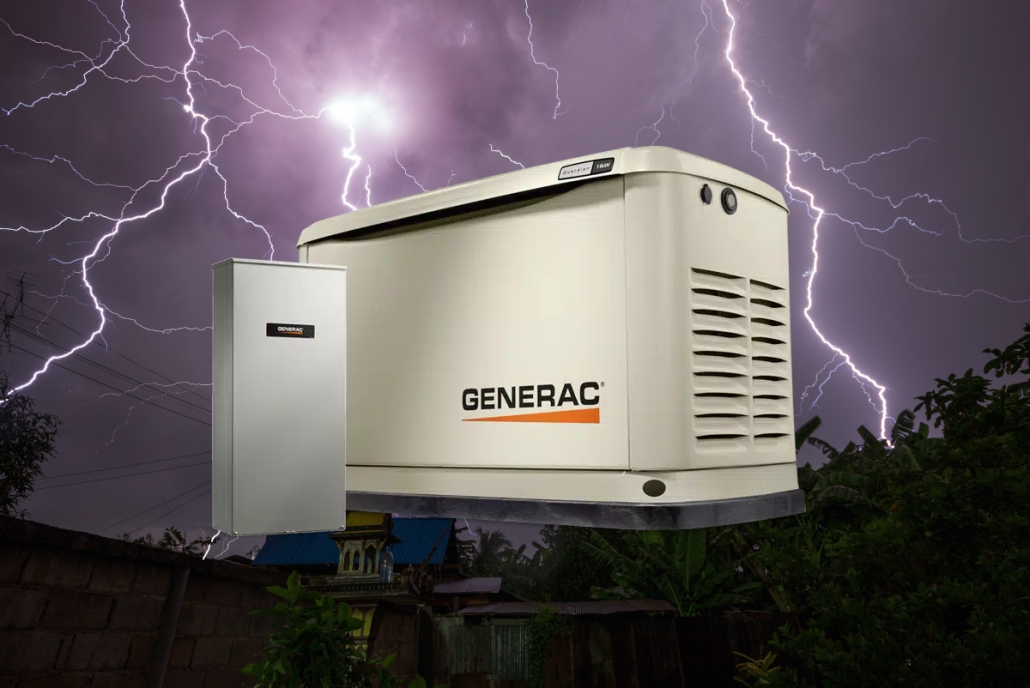
- Consider a whole house generator. Extended power outages after major storms can be hard on HVAC systems when power is restored suddenly. Berico installs Generac whole home generators, which provide seamless backup power and eliminate the surge risk that comes with utility power restoration.
- Check your electrical panel. If your home has an older panel, it may be less effective at handling modern electrical loads and more susceptible to surge damage. Berico’s licensed electricians can assess your panel and recommend upgrades if needed.
What Should I Do If a Storm Damages My HVAC System?
If you suspect storm damage to your HVAC system, the first step is to disconnect power at the outdoor disconnect and at the breaker, perform a visual inspection without touching any electrical components, and call a licensed HVAC technician before attempting to restart the system.
If you need HVAC repair work performed after a storm harms your system, calling Berico is the best choice. The Berico team offers professional electrical repair in Greensboro, always delivering outstanding customer service and reliable results. Berico’s technicians are available around the clock, every day of the year, and can diagnose storm-related HVAC damage, replace failed components, and restore your system to proper operation.
Because Berico also provides licensed electrical services, homeowners dealing with both HVAC and electrical damage from the same storm can address both with a single call. Whether the issue is a blown control board, a failed compressor, damaged wiring, or a need for surge protection installation, the Berico team handles it all.
Make a call to Berico today to learn more about the services that are available and to schedule your first appointment.
Your HVAC System Is Worth Protecting
Storms are a fact of life in Greensboro and throughout the Triad. Your HVAC system is one of the most significant investments in your home, and it deserves the same level of protection you give your roof or your vehicle. A combination of pre-season maintenance, proper site clearance, and whole house surge protection gives your system the best chance of surviving storm season without an expensive repair call.
When damage does happen, Berico has been the Triad’s trusted partner for home comfort and emergency repairs for over a century. No matter what a storm throws at your home, Berico is ready to help you recover quickly and get your system back online.
People Also Ask
Common questions from Greensboro-area homeowners researching storm damage and HVAC protection.
Can a power surge from a storm destroy my air conditioner?
Yes. A large power surge from a nearby lightning strike or utility event can damage or destroy an HVAC system’s control board, capacitor, and, in severe cases, the compressor motor. These components are sensitive to overvoltage and may fail immediately or develop intermittent issues in the weeks following the surge.
How do I know if my HVAC was damaged by a lightning strike?
Common signs of lightning or surge damage include: the system won’t start at all after the storm, the thermostat is unresponsive or displaying error codes, the outdoor unit hums but the fan or compressor doesn’t engage, or circuit breakers for the HVAC system have tripped. A licensed technician can perform a component-level diagnosis to identify exactly what failed.
Can an air conditioner get damaged by flooding?
Yes. While outdoor condenser units are built to withstand rain, standing water that submerges the unit can reach internal electrical components, including the capacitor, contactor, and motor windings. Do not restart a unit that has been submerged until a technician has inspected and cleared it.
Does homeowner’s insurance cover storm damage to an HVAC system?
Storm damage to HVAC equipment caused by a covered peril, such as a lightning strike or wind-driven debris, is typically covered under a standard homeowner’s insurance policy. Flood damage may require separate flood insurance. Surge damage is sometimes covered, but depends on the policy language. Contact your insurance provider to confirm your coverage before filing a claim.
Does a whole house surge protector protect my HVAC system?
Yes. Because your HVAC system is hardwired into your electrical panel rather than plugged into an outlet, plug-in surge strips cannot protect it. A whole house surge protector installed at the panel intercepts voltage spikes before they can reach any circuit in the home, including the HVAC system. This is one of the most effective steps a Greensboro homeowner can take to protect HVAC equipment from storm-related electrical damage.
How often should I have my HVAC system inspected after a storm?
Any time a major storm passes through, including storms that produce lightning, high winds, or flooding, it is a good practice to have a technician inspect your system. At minimum, a visual inspection by the homeowner should be performed after every significant storm, with a professional inspection scheduled if anything appears damaged or if the system is behaving differently than normal.


Leave a Reply
Want to join the discussion?Feel free to contribute!