

Why Propane Doesn’t Degrade in Storage: What That Means for a Backup Generator
 Quick Answer: Propane stays stable in storage because it is kept as a pressurized liquid inside a sealed tank, which excludes the oxygen and moisture that cause gasoline to oxidize and diesel to gel in cold weather. That storage stability is also why a propane generator tends to run cleaner over time than a gasoline or diesel unit: less carbon and gum buildup inside the engine means less fuel-system maintenance and a more reliable start when the generator is actually needed.
Most explanations of why propane makes a good backup fuel stop at “it doesn’t go bad.” That is true, but it skips the more useful part: the actual chemistry behind why propane holds up and gasoline and diesel don’t, and what that difference means for the generator itself over years of ownership.
Why Propane Doesn’t Oxidize Like Gasoline Does
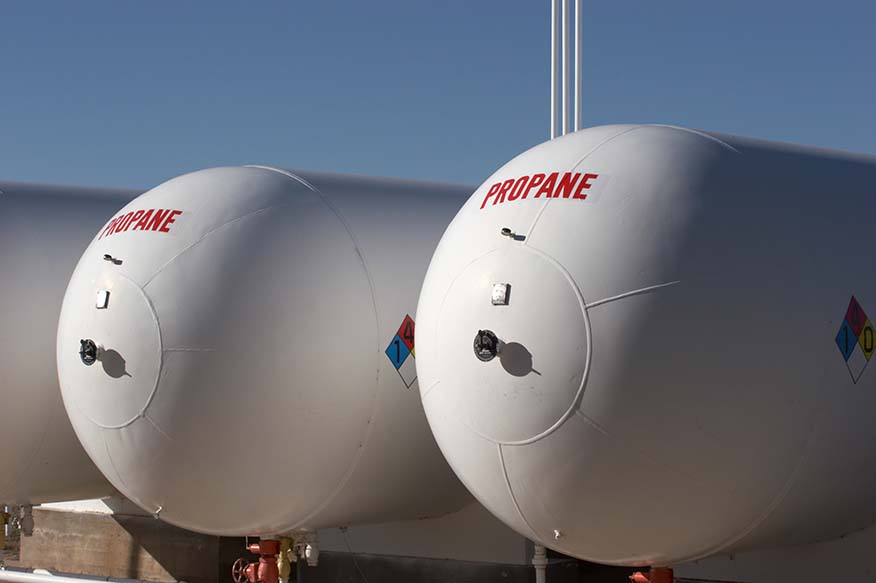
Propane stays chemically stable in storage because it is sealed inside a pressurized tank with no exposure to oxygen, while gasoline is stored in a vented container where oxygen and moisture reach the fuel directly.
Gasoline is a mix of volatile hydrocarbons, and those compounds react with oxygen over time in a process similar to how other organic substances degrade when exposed to air. That reaction produces gum and varnish-like residues that were never part of the original fuel. Propane, stored as a liquid under pressure in a fully sealed tank, never gets that oxygen exposure in the first place, so the reaction that breaks gasoline down simply does not happen to propane sitting in storage.
What Actually Happens Inside a Gas Tank Over Time
Gasoline left in storage gradually loses its lighter, more volatile compounds to evaporation while the remaining fuel oxidizes into a sticky residue that can clog small fuel-system passages.
This is why gasoline needs a stabilizer additive for any storage beyond a few months, and why fuel that has sat too long can leave deposits inside a carburetor or fuel injector fine enough to block normal operation. None of this happens gradually and reversibly. Once gasoline has oxidized and evaporated to this degree, running it through an engine is more likely to cause a problem than to power it reliably.
Why Diesel Gels in Cold Weather But Propane Doesn’t
Diesel fuel contains paraffin wax compounds that crystallize and thicken the fuel as temperatures drop, while propane remains a stable liquid under pressure regardless of the outdoor cold typical in this region.
That wax crystallization process, commonly called gelling, can clog fuel filters and fuel lines enough to prevent a diesel generator from starting at exactly the moment cold weather is most likely to have caused a power outage in the first place. Propane’s behavior in a sealed, pressurized tank is not affected by the same mechanism, which is part of why it remains dependable during the kind of winter storm that tends to cause outages in the Greensboro area.
How Fuel Choice Affects Generator Engine Longevity
A generator running on propane typically develops less internal carbon buildup than one running on gasoline or diesel, since propane burns more completely and leaves fewer combustion byproducts behind inside the engine.
Gasoline and diesel combustion leaves behind soot, unburned hydrocarbons, and other residues that accumulate on valves, spark plugs, and other internal components over time. Propane’s cleaner combustion produces meaningfully less of this residue, which is part of why a propane engine can often go longer between certain types of maintenance related specifically to combustion byproducts, compared to an equivalent gasoline or diesel engine under similar use.
Clean fuel and clean combustion address one side of a reliable backup power setup. Pairing that with a preventative HVAC maintenance plan covers the other side, keeping the rest of the home’s heating and cooling system running efficiently alongside a dependable backup power source.
Why Gasoline Generators Need More Frequent Fuel System Attention
A gasoline generator’s carburetor and fuel lines are the components most likely to suffer from the gum and varnish residue left behind by degraded fuel, particularly on a generator that sits unused between outages.
Small carburetor jets are especially vulnerable to this kind of buildup, since even a small amount of residue can block a passage narrow enough to prevent the engine from running correctly. A generator that is only started occasionally, which describes most backup generators, is exactly the situation where this kind of fuel degradation is most likely to become a problem, since there is no regular fuel turnover flushing fresh fuel through the system. A propane generator does not face this specific failure mode, since the fuel supplying it has not been sitting and degrading between uses the way gasoline does.
What an Experienced Fuel Technician Watches For Long-Term
An experienced technician servicing generators over the years typically sees a clear difference in the type of maintenance gasoline units need compared to propane units, even when both are otherwise well cared for.
“The gasoline units are the ones I see with gummed-up carburetors and fuel lines, especially if they only get started once or twice a year for testing. The propane units just don’t have that problem, because there’s no old, degraded fuel sitting in the system waiting to cause an issue. That’s less about the engine itself and entirely about what’s actually flowing through the fuel line.”
Darrel Honeycutt, Expert Fuel Technician
The Result: Consistent Power Output When It’s Needed
A generator supplied by stable, uncontaminated propane and free of fuel-system residue delivers steady, consistent power output for the full duration of an outage, without the risk of a clogged carburetor or gelled fuel line interrupting the job.
This is the practical result of everything covered above. The chemistry that keeps propane from degrading in storage, and the cleaner combustion that keeps the fuel system free of residue, both point toward the same outcome: a generator that starts reliably and keeps running for as long as fuel remains in the tank. None of this is a guarantee that skips routine generator maintenance entirely. Oil changes, spark plug checks, and general mechanical upkeep still apply to a propane unit the same as any other engine. What propane’s storage stability removes from the equation is one specific, common failure mode: a generator that has the fuel it needs but cannot actually run because that fuel has degraded while sitting in the tank.
For a closer look at how propane performs during an actual outage, including standby versus portable generator options, see Does Propane Work During a Power Outage?.
Stay Ready With Berico
Using Berico for propane delivery in Greensboro keeps a propane supply on hand and ready whenever it is needed, whether for a propane generator or propane heating equipment on the property. As a propane supplier serving the Greensboro area, Berico prioritizes safety alongside dependable delivery and clear pricing. Call now or fill out the form to get started.
People Also Ask: Propane Storage and Generator Fuel
Why doesn’t propane degrade in storage the way gasoline does?
Propane is stored as a pressurized liquid inside a sealed tank with no exposure to oxygen, while gasoline sits in a vented container where oxygen and moisture reach the fuel directly. Gasoline’s volatile compounds react with that oxygen over time, forming gum and varnish residue, a reaction propane never undergoes because it never has that oxygen exposure.
Why does diesel gel in cold weather?
Diesel fuel contains paraffin wax compounds that crystallize and thicken as temperatures drop, a process called gelling that can clog fuel filters and lines. Propane, stored as a stable liquid under pressure, is not affected by this same mechanism, which is why it remains dependable in cold weather that would cause problems for a diesel generator.
Does a propane generator need less maintenance than a gasoline generator?
In terms of fuel-system maintenance specifically, often yes. Gasoline generators are more prone to carburetor and fuel line issues caused by gum and varnish residue from degraded fuel, particularly on units that sit unused between outages. Propane generators do not face this specific failure mode, since the fuel has not been sitting and degrading in the system.
Why do gasoline generators sometimes fail to start after sitting unused?
A generator that only runs occasionally is exactly the situation where gasoline degradation becomes a problem, since there is no regular fuel turnover flushing fresh fuel through the system. Gum and varnish residue from oxidized fuel can clog small carburetor passages, preventing the engine from starting or running correctly.
Does propane combustion leave less residue inside a generator’s engine?
Yes. Propane burns more completely than gasoline or diesel, leaving behind meaningfully less soot and unburned hydrocarbon residue on internal components like valves and spark plugs. This cleaner combustion is part of why propane engines can often go longer between certain types of maintenance tied specifically to combustion byproducts.
How long can propane be stored without degrading?
Propane stored properly in a professionally installed propane tank does not degrade the way gasoline or diesel does over time, since it is not exposed to the oxygen and moisture that cause those fuels to break down. This is a major part of why propane is well suited to backup generator use, where fuel may sit unused for long stretches between outages.
Is a fuel stabilizer needed for propane the way it is for gasoline?
No. Fuel stabilizers are added to gasoline specifically to slow the oxidation process that causes it to degrade in storage. Propane does not undergo that same oxidation process in its sealed, pressurized storage tank, so a stabilizer additive is not necessary.
Can a propane generator still have engine problems over time?
Yes, propane generators are not immune to all maintenance needs, since components like spark plugs, oil, and air filters still wear over time with any engine. The specific advantage propane offers is around fuel-system residue and degraded fuel issues, not a complete exemption from routine generator maintenance.
Is propane a good choice for a generator that only runs a few times a year?
Yes, propane is particularly well suited to infrequently used generators, since the fuel-degradation problems that affect gasoline generators sitting idle between uses do not apply to propane. A gasoline generator used only occasionally is more likely to develop fuel-system issues than a propane generator used the same way.
Does the type of fuel affect how long a generator lasts overall?
Fuel choice affects the specific maintenance a generator needs more than its absolute lifespan, though avoiding fuel-system issues caused by degraded gasoline or gelled diesel does reduce one meaningful source of generator problems over time. Other factors, including overall usage and general maintenance, also play a significant role in a generator’s service life.


Leave a Reply
Want to join the discussion?Feel free to contribute!