

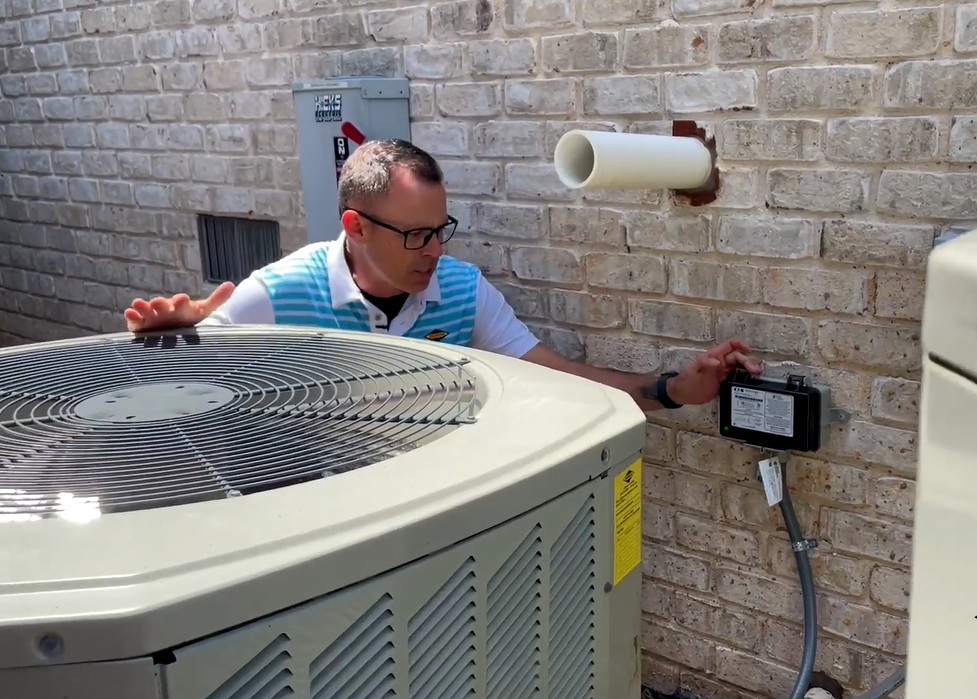
Why Is My AC So Loud All of a Sudden?
 An air conditioner that suddenly gets louder is almost always reacting to a mechanical problem: loose or failing components, debris in the outdoor unit, a worn fan motor, refrigerant issues, or a struggling compressor. The specific sound your AC is making is the most useful clue about which problem you are dealing with. Did your air conditioner recently get much louder with no obvious explanation? This particle will help you understand what might be going on so you can describe it clearly when you call for HVAC repair.
Greensboro’s long cooling season, running from late spring through September, puts sustained demands on AC systems that accelerate normal component wear. High humidity levels also create conditions that affect electrical contacts, capacitors, and fan motor bearings faster than drier climates. When a system that has been quietly doing its job suddenly announces itself with a new noise, the cause is usually something that has been developing over time and finally reached the point where it cannot be ignored.
What Causes Loud Air Conditioning?
An air conditioner may suddenly become loud due to a number of reasons, from debris in the outside unit to a failing compressor. Unusual noises are often a sign that parts are vibrating or otherwise struggling, and these warning signs should not be ignored.
One of the tricky things about dealing with a noisy air conditioner is that the problem can stem from many different places. The sound itself is your best diagnostic tool. A rattling noise points to something different than a hissing noise, and a banging noise requires a different response than a buzzing noise. The sections below break down what each type of sound typically indicates and how urgent the response should be.
AC Making a Rattling or Clanking Noise
A rattling or clanking noise from an AC unit typically indicates loose panels, debris caught in the outdoor condenser, or a failing component that has come loose from its mount and is contacting other parts as the system runs.
- Loose panels. Over time, panels or other internal components can shake loose and start to vibrate loudly as the system is running. The screws and fasteners that hold the cabinet together can work themselves loose over seasons of use, especially on older systems.
- Debris in the outdoor unit. If leaves, sticks, or other pieces of debris get into your outdoor condenser, they will interfere with the fan blades. Since those blades spin so fast, the noise created can be quite alarming. Greensboro’s spring pollen season and fall leaf drop are the two periods when debris-related noise calls are most common.
A rattling that transitions into a hard clanking sound is more serious. Clanking typically means a component has fully come loose inside the unit and is striking the housing or other parts with each rotation. Turn the system off if you hear hard clanking and call for service before running it again, as continued operation can cause additional damage.
AC Making a Grinding or Screeching Noise
A grinding or screeching noise from an AC unit usually indicates a failing fan motor, worn bearings, or a belt-driven component that has deteriorated, and these sounds require prompt attention because they typically worsen quickly and can lead to complete motor failure.
- Worn fan motor or blades. You might notice a loud grinding or buzzing noise if you are having trouble with the fan motor or the blades themselves. Fan motor bearings dry out over time, and when they do, the metal-on-metal friction produces a grinding or screeching that gets progressively louder with each use cycle.
A failing capacitor can also produce a grinding or struggling sound as the fan motor tries to start under load without proper electrical support. The capacitor is a small cylindrical component inside the outdoor unit that provides the startup voltage boost the fan motor and compressor need. Capacitor failure is one of the most common service calls during Greensboro’s summer months, when high temperatures stress these components most. Screeching sounds should be treated as urgent: continued operation risks burning out the motor entirely, which is a significantly more expensive repair than replacing a capacitor or motor bearing.
AC Making a Hissing or Bubbling Noise
A hissing or bubbling noise from an AC unit is most commonly caused by a refrigerant leak, where escaping refrigerant gas produces a hissing sound at the leak point or a bubbling sound if air has entered the refrigerant line.
- Refrigerant issues. When the problem stems from the refrigerant, there might be a hissing or bubbling sound coming from the system. Refrigerant does not deplete naturally: a hissing sound is a signal that there is a leak in the refrigerant circuit, not just a low charge that can be topped off.
A refrigerant leak also reduces cooling efficiency, causes the compressor to work harder, and can eventually freeze the evaporator coil. If you hear a hissing sound and notice that the home is not cooling as well as it normally does, both symptoms together make a refrigerant leak the most likely diagnosis. This is not a DIY repair. Refrigerant handling requires EPA certification, and the leak must be located and repaired before the system is recharged. Berico’s HVAC technicians are trained in refrigerant replacement and leak repair as part of their full AC repair service.
AC Making a Banging Noise
A banging noise from an AC unit is one of the more serious sounds the system can make, usually indicating a loose or broken component inside the compressor or a severely unbalanced blower assembly that is striking the housing with each rotation.
- Compressor problems. The compressor is a critical component in any air conditioner. If it is starting to fail, it might create a loud vibrating noise that is impossible to ignore. A banging sound specifically from the outdoor unit often points to something loose inside the compressor itself, such as a broken connecting rod, piston pin, or compressor mount.
A banging noise warrants an immediate system shutdown. Running a compressor with a broken internal component can cause catastrophic failure of the entire compressor, which is one of the most expensive single-component repairs in an HVAC system. Turn the system off, switch to fans if available, and call for service. Do not reset and restart the system to see if the noise goes away.
“In Greensboro, we see a pattern every summer where homeowners hear a new noise in June, assume it will go away, and call us in August when the system has completely failed. The noise is almost always telling you something specific. A hiss points to refrigerant. A grind points to a motor or bearing. A bang means stop the system right now. The earlier we get a look at it, the better the odds that it is a repair rather than a replacement.”
Karim Gourari, HVAC Technician, Berico
AC Making a Buzzing Noise
A buzzing noise from an AC unit can indicate electrical issues such as a failing contactor or capacitor, loose wiring, a refrigerant leak causing pressure irregularities, or debris vibrating against the fan assembly inside the outdoor condenser cabinet.
Electrical buzzing at the outdoor unit is often traced to the contactor, a relay switch that opens and closes to send power to the compressor and fan motor. Contactors wear over time, and a buzzing contactor may be on the verge of failing to close properly, which would prevent the compressor from starting at all. Electrical buzzing should always be evaluated by a licensed technician since the causes range from a simple debris issue to a wiring problem that poses a safety risk.
Why These Noise Changes Are So Important
A sudden increase in AC noise almost always signals that a component is failing or under abnormal stress, and continuing to run the system without investigation risks turning a manageable repair into a complete system failure that could have been prevented.
Your AC unit is always going to make some noise as it runs, but that noise should be modest and predictable. If it suddenly gets particularly loud, something has changed and a complete breakdown may not be far behind. It’s tempting to just ignore these noises, but that would be a mistake. Instead, your best bet is to take a closer look and make sure nothing is seriously wrong before continuing to use the air conditioner.
A Few Simple Checks Before Getting Help
Before calling for service, you can check for visible debris around and inside the outdoor condenser unit, listen to determine whether the noise is coming from the indoor or outdoor unit, and watch for visible vibration, which helps your technician narrow the diagnosis quickly when they arrive.
Most of the time, AC fixes need to be left to the professionals. However, there are a few things you can check on your own, starting with looking for debris near the outdoor unit. You can also listen to see if the noise is coming from inside or outside your home, and you can watch as it runs to see if you notice visible signs of vibration. All of this information will be helpful when you call to make an appointment, as you can give the technician direction as they start their inspection.
One additional check: make sure the outdoor unit is sitting level on its pad and that no vegetation has grown up around it. A unit that has settled unevenly can produce vibration noises that have nothing to do with internal component failure. Greensboro’s summer growth season means shrubs and grasses can encroach on a condenser quickly, and restricted airflow around the cabinet stresses the fan motor and compressor even before noise becomes obvious.
When to Turn Your AC Off Immediately
Turn your AC off immediately and call for service if you hear banging, hard clanking, or screeching sounds, if you smell burning or detect a burning smell near the indoor unit or outdoor condenser, or if the noise began suddenly at full volume rather than gradually increasing over time.
These scenarios indicate that continuing to run the system risks additional damage. Banging and clanking mean something is loose and striking other components. Screeching means a motor or bearing is failing under friction. A burning smell means an electrical component or motor winding is overheating. In each case, the cost of the repair increases with every additional hour the system runs. Berico offers 24-hour emergency AC service for Greensboro homeowners who need a same-day response.
Call Berico Today for AC Repair in Greensboro
Whether you need AC repair in Greensboro or any other type of air conditioning services, Berico should be your first choice. The Berico team has been serving Greensboro and the Triad since 1924, and the technicians are trained in all aspects of AC systems, from refrigerant replacement and repairs to complete diagnostics on noisy or failing equipment. Reach out now for assistance. If your system is making a clicking noise specifically, Berico’s guide to AC clicking sounds covers that scenario in detail.
Berico offers 24-hour emergency AC service, free home energy audits, and Comfort and Protection Service Agreements that include annual maintenance visits designed to catch failing components before they become noisy or fail completely. A system that is tuned up every spring arrives at the height of Greensboro’s summer cooling season in the best possible condition to run quietly and efficiently.
Frequently Asked Questions About a Loud AC
Is it safe to run my AC if it is making a loud noise?
It depends on the sound. A mild rattling or buzzing may be safe to run briefly while you schedule a service call, but banging, hard clanking, screeching, or any noise accompanied by a burning smell warrants an immediate shutdown. Continuing to run a system with a broken internal component or failing motor can cause additional damage that significantly increases the repair cost.
Why did my AC suddenly get louder overnight?
A sudden overnight noise increase is typically caused by debris entering the outdoor unit, a component that finally failed after a period of gradual wear, or a capacitor or contactor that gave out during the previous cooling cycle. Greensboro’s summer storms can drive leaves and debris into the condenser cabinet overnight. Check for visible debris first, and if the unit is clear, call for a diagnostic visit.
What does a hissing AC sound mean?
A hissing sound from an AC unit most commonly indicates a refrigerant leak, where pressurized refrigerant gas is escaping from a crack or failed joint in the refrigerant line. A hissing sound paired with reduced cooling output and higher energy bills is a strong indicator of a leak. Refrigerant repair requires a licensed HVAC technician and cannot be addressed with a DIY recharge.
Can a noisy AC fix itself?
No. Mechanical and electrical issues that cause AC noise do not resolve on their own. Loose components get looser, worn bearings deteriorate further, and refrigerant leaks continue to lose pressure. A noise that seems to go away often means the component has failed completely rather than recovered. Early diagnosis is always less expensive than waiting for a complete breakdown.


Leave a Reply
Want to join the discussion?Feel free to contribute!