

Why Do My Circuit Breakers Keep Tripping?
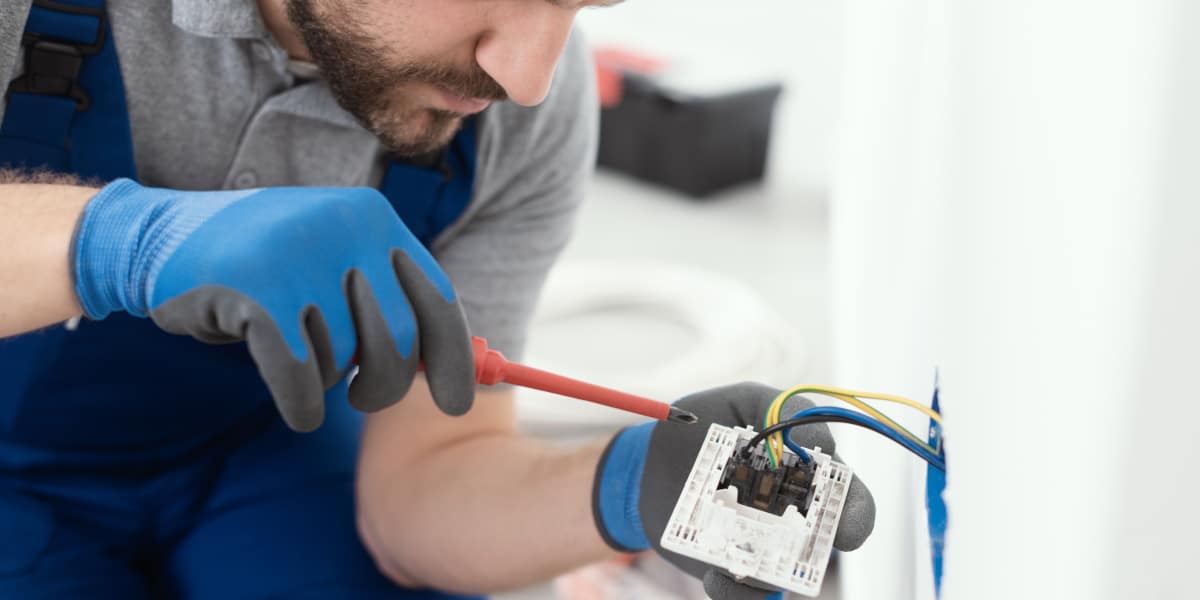
Circuit breakers keep tripping due to overloaded circuits, short circuits, ground faults, faulty appliances, arc faults, or a breaker that has simply worn out and can no longer hold its rated load reliably. Circuit breakers play a critical safety role in electrical systems. If they keep tripping in your home, Greensbor electrical repair may be needed to resolve the problem.
Common Reasons for Circuit Breakers to Trip
It’s normal to have a circuit breaker trip occasionally, but if you have regular issues with your breakers, a bigger problem is likely at play.
Most residential circuits in Greensboro homes are rated at either 15 amps or 20 amps for general-purpose circuits, with higher-amperage dedicated circuits for appliances like electric dryers, water heaters, and HVAC equipment. When the total draw on a circuit exceeds its rated capacity, the breaker trips to prevent the wiring from overheating. Understanding which type of problem is causing the trip is the first step toward the right fix.
Which Problem Is Leading to Your Tripped Breakers?
Identifying which cause is tripping your circuit breakers requires evaluating whether the trip happens under heavy load, immediately upon reset, gradually over time, or only when a specific appliance is running on the affected circuit.
The correct fix for breakers that keep tripping depends on the underlying cause of the problem. Consider the following possibilities:
- Overloaded circuits. When too many devices are drawing power from the same circuit, that circuit will become overloaded and may trip. The fundamental purpose of breakers is to cut power in this scenario to prevent overheating. A standard 15-amp circuit can safely carry about 1,440 watts of continuous load. Running multiple high-draw devices on the same circuit, such as a space heater, hair dryer, and microwave, will frequently push past that threshold.
- Short circuits. When a hot wire touches a neutral wire, a short circuit occurs. This leads to a sudden surge of electricity, and again, the breaker will trip for safety purposes. Short circuits happen when wire insulation deteriorates, connections loosen with age, or wiring is damaged by pests or physical impact. The breaker often trips immediately and may produce a burning smell or a popping sound at the panel.
- Ground faults. This is similar to a short circuit, but a little different. In this case, electricity strays from its intended path, perhaps due to moisture exposure or damaged wiring. Ground faults are particularly common in kitchens, bathrooms, garages, and outdoor areas where moisture is present, which is why GFCI protection is required in those locations under current NC electrical code.
- Arc faults. An arc fault occurs when electricity jumps across a gap in damaged, loose, or deteriorating wiring, generating intense heat that can ignite surrounding materials inside a wall cavity before any visible sign of a problem appears. Arc faults are one of the leading causes of residential electrical fires. Modern AFCI breakers are designed to detect and interrupt arc faults, and they are required under the 2023 NEC for most living areas in new and renovated construction.
- Faulty appliances. If you have a malfunctioning appliance, it could draw too much power and cause the breaker to trip over and over again. Unplugging the suspected appliance and resetting the breaker is a quick test. If the breaker holds without the appliance connected, the appliance itself is the problem.
- A failing or worn-out breaker. Circuit breakers are mechanical devices with a finite service life. A breaker that trips repeatedly with no apparent overload, short circuit, or fault may simply be worn out. Breakers in older Greensboro homes can become weakened over decades of use and may trip at loads well below their rated capacity. This is one of the most common scenarios that leads to a circuit breaker replacement rather than a repair of the underlying circuit.
What Greensboro Homeowners Should Know About Older Electrical Systems
Older Greensboro homes face a higher risk of recurring breaker trips because many were built with 100-amp panels that are undersized for modern electrical loads, and homes built between 1965 and 1973 may contain aluminum branch-circuit wiring that loosens over time and creates intermittent faults.
A 100-amp panel was considered adequate when it was installed in homes built decades ago. Modern households run significantly more electrical load: multiple refrigerators, large HVAC systems, EV chargers, home office equipment, and high-draw kitchen appliances. An undersized panel that is consistently running near capacity will produce chronic tripping even without a specific fault in any individual circuit. Panel capacity, not just individual circuit issues, is often the root cause.
Aluminum wiring, which was used in a significant number of Greensboro homes constructed during a period when copper prices were high, expands and contracts at a different rate than the copper connections it terminates on. Over time, those connections loosen. Loose connections at outlets, switches, and the panel create resistance, generate heat, and can cause both ground faults and arc faults that trip breakers repeatedly. If your home was built during that period and you are having recurring electrical problems, aluminum wiring should be part of the diagnostic conversation with your electrician.
“In Greensboro, the most common thing we find on a chronic tripping call is a 100-amp panel in a home that now has twice the electrical load it was designed for. The second most common thing is a breaker that tests fine on paper but trips at 12 amps on a 15-amp circuit because it’s been doing that job for 40 years. Both of those situations look like circuit problems from the outside, but the real fix is the panel, not the wiring.”
Toni Mortera, Electrician, Berico
When Should You Immediately Call an Electrician?
Call an electrician immediately if a tripped breaker is accompanied by a burning smell, warm or discolored outlet covers, sparking at the panel, a breaker that will not reset, or any breaker that trips instantly the moment it is reset to the on position.
These symptoms indicate that the problem has moved beyond a simple overload into potentially dangerous territory. A breaker that trips instantly on reset usually means a short circuit or ground fault is still present in the wiring, and restoring power to that circuit before the fault is located and repaired creates a fire and shock risk. Berico offers 24-hour emergency electrical service for Greensboro homeowners facing these situations.
Other scenarios that warrant an immediate call rather than troubleshooting on your own:
- Multiple breakers tripping at the same time, which can indicate a problem at the main panel rather than individual circuits
- A breaker that feels hot to the touch at the panel
- Buzzing or crackling sounds coming from the panel or from outlets on the affected circuit
- Any visible scorching or discoloration on breakers, wiring, or the panel interior
- Breakers tripping in a home with known aluminum wiring
Don’t Ignore This Ongoing Problem
Recurring breaker trips are a warning signal from your electrical system that should be diagnosed and resolved, not managed by resetting and moving on, because the underlying cause will worsen over time and increase the risk of wiring damage or electrical fire.
It’s easy to reset a breaker after it has been tripped. As a result, you might be tempted to just ignore the problem and move on. You can quickly reset the breaker after it trips and go on with your day. That’s fine if it only happens once in a while, but if it happens often, there is a problem that should be addressed. Some underlying cause is tripping the breaker, so you would be smart to pay attention to that warning sign and dig deeper to see how it can be fixed correctly.
Take These Steps Before Getting Help
Before calling a professional, you can take a few basic steps to determine whether the trip is caused by a simple overload, which is the most common and easily resolved cause of a tripped breaker in a home. First, unplug a few devices from the affected circuit and see if that makes a difference. You may simply be overloading the circuit by asking it to supply too much power in too many directions. Also, you can break up high-powered devices on multiple circuits if they need to run at the same time. If these basic adjustments don’t solve the problem, it’s likely not an overload issue, and you’ll need to get professional help.
Berico’s Greensboro Electricians Are Here for You
Whether you need a simple circuit breaker repair or a full circuit breaker replacement, Berico’s licensed electricians can diagnose the problem and recommend the right solution. Whatever the case, turn to Berico today to get the help you require.
Berico has served Greensboro and surrounding areas since 1924. The team’s licensed electricians are familiar with the full range of electrical systems found in local homes, from newer construction to older properties with undersized panels, aluminum wiring, and aging breakers. Whether the diagnosis points to a simple circuit repair or a full panel upgrade, Berico can assess the situation accurately and give you a clear path forward.
Frequently Asked Questions About Tripping Circuit Breakers
Is it dangerous if a circuit breaker keeps tripping?
It can be. A breaker that trips occasionally due to a temporary overload is doing its job correctly. A breaker that trips repeatedly, trips on reset, or trips with no apparent cause may indicate a short circuit, ground fault, arc fault, or a failing breaker, all of which require professional diagnosis. Continuing to reset a breaker without finding the cause increases the risk of wiring damage or electrical fire.
How do I know if I need a new circuit breaker or a new panel?
A single breaker that trips repeatedly under normal load, feels hot, or will not hold its position after reset typically needs to be replaced. If multiple breakers are tripping, if the panel is undersized for your home’s current electrical load, or if the panel is more than 25 to 30 years old, a full panel evaluation is warranted. Berico’s licensed electricians can test individual breakers and assess overall panel capacity to determine the right solution.
Can a bad appliance cause a breaker to keep tripping?
Yes. A malfunctioning appliance that draws more current than its rated load will trip the breaker on the circuit it is connected to. Unplug the suspected appliance and reset the breaker. If the breaker holds without the appliance connected, the appliance is the source of the problem. An appliance with a damaged heating element, failing motor, or short in its power cord can cause repeated trips even when nothing else is on the circuit.
How long do circuit breakers last?
Most circuit breakers have a service life of 30 to 40 years under normal conditions, though breakers in older homes may degrade faster due to heat cycling, corrosion, or frequent trips over decades of use. A breaker that is tripping at loads well below its rated capacity is likely nearing the end of its useful life and should be tested and replaced by a licensed electrician.