
How Professional Spring System Checks Help Greensboro Homes Avoid Mid-Summer Breakdowns
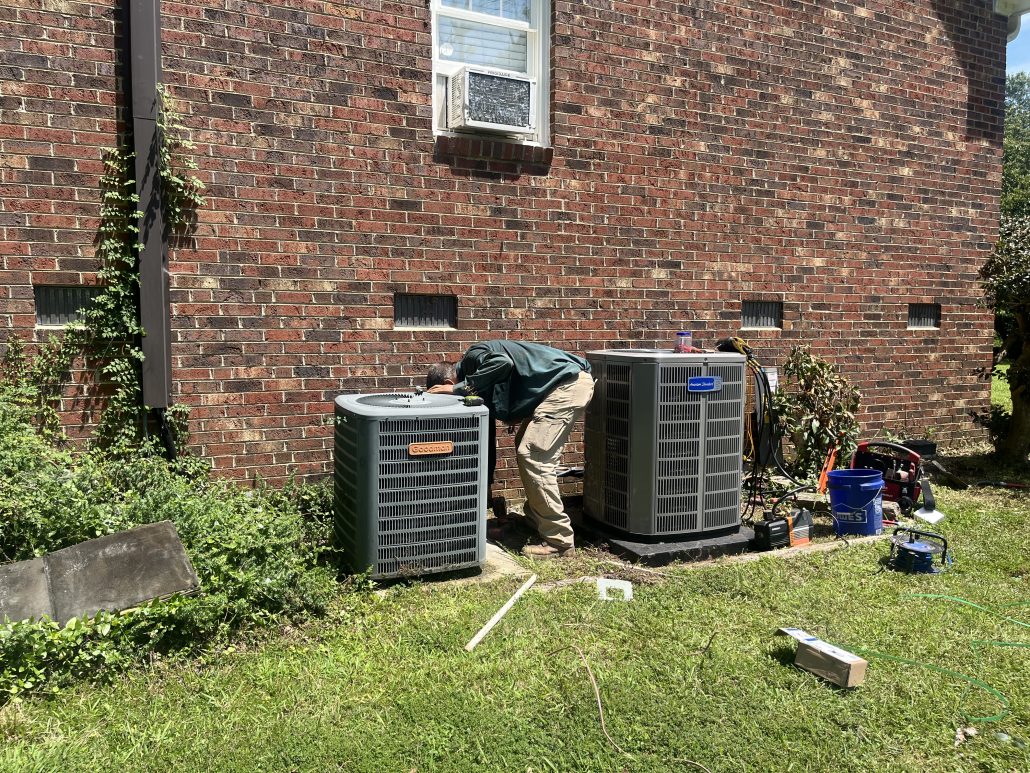
Avoid Summer AC Breakdowns with Spring HVAC Service
Professional spring HVAC system checks prevent mid-summer air conditioning breakdowns by identifying worn components like capacitors and contactors before failure, cleaning dirty evaporator and condenser coils that reduce cooling efficiency by 20-30%, verifying proper refrigerant charge preventing inadequate cooling and compressor damage, testing electrical connections that fail under high-load summer conditions, and calibrating thermostats ensuring accurate temperature control when Greensboro temperatures reach the 90s and HVAC emergency service wait times extend to 3-7 days during peak demand periods.
The middle of summer is the worst possible time for an HVAC breakdown in Greensboro. Avoid that outcome by having your system thoroughly checked during the spring.
According to Karim Gourari, an expert HVAC technician serving Greensboro and the Triad, “We respond to hundreds of emergency AC calls every July and August, and I’d estimate 70% of those breakdowns stem from issues we routinely catch during spring tune-ups. Last June, we found a failing capacitor during a maintenance visit in Irving Park that would have cost $150 to replace preventively. The homeowner’s neighbor with an identical system skipped their spring service, and their capacitor failed two weeks later during the first 95-degree day. They waited four days for emergency service and paid $425 for the same repair, plus they lost $300 worth of refrigerated food.”
Greensboro’s climate creates particularly challenging conditions for air conditioning systems. Summer temperatures regularly exceed 90 degrees with humidity levels averaging 70%, forcing AC units to run extended cycles that stress components already weakened by winter dormancy and spring temperature fluctuations. Systems that enter summer with hidden problems like low refrigerant charge, dirty coils, or weakened capacitors fail rapidly under this extreme demand, leaving families without cooling precisely when they need it most and when HVAC companies experience their longest service backlogs.
The Benefits of Spring HVAC Service
Scheduling professional HVAC maintenance in the spring helps by identifying small problems before they can turn into major failures. A thorough inspection during this part of the year will improve efficiency, extend the life of the system, and get your AC ready for whatever the Greensboro summer has in store.
Spring maintenance addresses problems that develop during the winter heating season and periods when air conditioning systems sit dormant. Electrical connections loosen from thermal cycling as systems alternate between heating and cooling modes during spring’s temperature fluctuations. Dust and debris accumulate on coils and in blower compartments. Condensate drain lines develop algae growth from moisture without the constant flushing that occurs during active cooling season. Capacitors weaken gradually, showing no obvious symptoms until summer heat pushes them beyond their degraded capacity.
These developing problems remain invisible to homeowners because air conditioning systems appear to function normally during mild spring weather when cooling demands stay light. A system operating at 70% efficiency still maintains comfortable temperatures when outdoor conditions only reach the 70s and 80s. That same compromised system fails completely when Greensboro weather turns brutal in July and August, demanding maximum performance from equipment already operating below optimal capacity.
Professional spring inspections identify these hidden problems before summer stress causes catastrophic failures. NATE-certified technicians use diagnostic tools including manifold gauges measuring refrigerant pressures, amp meters testing motor electrical draw, digital thermometers verifying temperature splits across coils, and airflow measurements ensuring proper cubic feet per minute delivery. These objective measurements reveal system problems that visual inspection alone cannot detect.
What Does a Comprehensive Spring HVAC Inspection Include?
A comprehensive spring HVAC inspection performed by licensed technicians includes refrigerant charge verification with pressure and temperature measurements, evaporator and condenser coil cleaning restoring heat transfer efficiency, electrical connection inspection and tightening preventing arc faults, capacitor testing measuring microfarads against rated specifications, thermostat calibration ensuring accurate temperature control, condensate drain cleaning preventing water damage and biological growth, blower component cleaning maintaining proper 400 CFM airflow per ton of cooling capacity, safety control verification, and amp draw testing on all motors identifying components approaching failure before complete breakdown occurs.
Refrigerant Level Verification
Refrigerant charge affects cooling capacity, energy efficiency, and compressor longevity more than any other single factor. Systems operating with low refrigerant charge provide inadequate cooling while forcing compressors to run continuously, generating excessive heat that degrades motor windings and leads to premature compressor failure, requiring $1,500 to $3,500 replacement.
Technicians measure refrigerant pressures on both high and low sides of the system, comparing readings against manufacturer specifications adjusted for current outdoor temperature and humidity conditions. They calculate subcooling and superheat values that reveal whether systems contain proper refrigerant charge or have developed leaks requiring repair and recharge.
Low refrigerant typically indicates leaks in coils, line sets, or connection points that must be located and repaired before simply adding refrigerant. Adding refrigerant to leaking systems wastes money and harms the environment while failing to address the underlying problem that will cause the same symptoms to recur within weeks or months.
Coil Cleaning and Inspection
Evaporator coils inside air handlers and condenser coils outside accumulate dirt, pollen, and organic debris that acts as insulation, preventing efficient heat transfer between refrigerant and air. Dirty coils reduce system capacity by 20-30% while increasing energy consumption proportionally as equipment runs longer cycles attempting to achieve thermostat set points.
Greensboro’s heavy spring pollen season from oak, pine, and other trees creates particularly problematic coil contamination. Yellow pollen blankets outdoor condenser coils, restricting airflow and reducing heat rejection capacity. Indoor evaporator coils accumulate dust, pet dander, and biological growth, including mold and mildew that thrive in the moist environment created during cooling operation.
Professional coil cleaning using appropriate cleaners and techniques removes these contaminants without damaging delicate aluminum fins that bend easily under excessive pressure. Technicians also inspect coils for corrosion, refrigerant leaks, and fin damage that reduces airflow and system performance.
Electrical Connection Inspection
Electrical connections throughout HVAC systems gradually loosen from thermal cycling as components heat during operation and cool when idle. Loose connections create resistance that generates heat, potentially reaching temperatures that melt wire insulation, damage terminals, and cause fires.
Technicians inspect and tighten all electrical connections, including those at the outdoor disconnect, contactor, capacitor, compressor, condenser fan motor, indoor blower motor, and control board. They look for signs of overheating, including discolored wires, melted insulation, pitted contactor points, and burnt terminals requiring component replacement.
Contact points in electrical contactors experience particular stress because they carry full compressor and fan motor current each time systems cycle on. Pitted or worn contacts create resistance and heat that damage compressors and motors, often causing failure during peak summer demand when electrical loads reach maximum levels.
Capacitor Testing and Evaluation
Capacitors provide starting and running electrical assistance to compressor and fan motors, storing and releasing electrical energy that helps motors overcome initial inertia and maintain efficiency during operation. Capacitors gradually lose capacitance over time, typically degrading 20-30% before complete failure.
Technicians measure capacitor microfarads using specialized meters, comparing actual values against ratings printed on capacitor labels. Capacitors reading 10% or more below rated capacity should be replaced preventively because they will likely fail within months, typically during peak summer heat when motors draw maximum current and weak capacitors cannot provide adequate electrical assistance.
Capacitor failure ranks among the most common causes of mid-summer AC breakdowns. Systems with failed capacitors often display symptoms including outdoor fan motor that won’t start, compressor that hums but won’t run, or complete system failure to operate. Emergency replacement during July and August typically costs $300 to $500 versus $150 to $200 during scheduled spring maintenance appointments.
Thermostat Calibration and Testing
Thermostats that read inaccurately cause comfort problems and inefficient operation. Thermostats reading 2-3 degrees off calibration cause systems to overcool spaces, wasting energy and creating uncomfortable temperature swings, or undercool, leaving families uncomfortable during hot weather.
Technicians verify thermostat accuracy using calibrated digital thermometers, comparing thermostat readings against actual air temperatures at the thermostat location. They test thermostat functions, including temperature sensing, system switching between heating and cooling modes, fan operation settings, and programmable schedule operation.
Modern programmable and smart thermostats also require software updates periodically, similar to computers and phones. Technicians update thermostat firmware, ensuring thermostats operate with the latest features and efficiency improvements from manufacturers.
Condensate Drain Cleaning
Air conditioning systems remove humidity from indoor air through the cooling process, producing condensate water that must drain away from indoor air handlers to prevent water damage, biological growth, and system shutdowns. Condensate drains gradually develop algae and slime buildup that restricts drainage, eventually causing complete blockages that overflow drain pans and trigger safety switches shutting down air conditioning operation.
Technicians clean condensate drain lines using specialized tools and treatments that remove biological growth and prevent future accumulation. They verify proper drainage by pouring water through drain pans and observing flow through drain lines to exterior or plumbing connections.
Greensboro’s high humidity creates particularly problematic conditions for condensate drain maintenance. Systems operating in humid conditions produce several gallons of condensate daily during peak summer operation, creating moist environments perfect for algae and mold growth in drain lines.
Blower Component Cleaning and Testing
Indoor blower assemblies move conditioned air through ductwork to living spaces, with proper airflow critical for system efficiency, comfort, and equipment longevity. Blower wheels accumulate dust and debris that reduces airflow while increasing motor load and energy consumption.
Technicians remove and clean blower wheels, inspect blower motors for proper amp draw and bearing condition, and verify blower wheels spin freely without rubbing housing components. They measure airflow at supply registers, ensuring systems deliver approximately 400 cubic feet per minute per ton of cooling capacity as designed by manufacturers.
Inadequate airflow causes multiple problems, including reduced cooling capacity, increased humidity levels indoors, frozen evaporator coils from insufficient air movement across cold coils, and premature compressor failure from refrigerant returning to compressors too cold (low superheat), damaging compressor valves and pistons.
Enjoy Many Advantages
Many homeowners overlook the value of a spring checkup for their HVAC equipment, but many benefits are waiting to be experienced.
Early Detection of Mechanical Problems
Everything wears out over time. Even the best air conditioner will eventually break down, but you can catch those potential failures ahead of time through a maintenance check. Key components like the compressor, fan motor, and electrical connections will be checked, and anything that looks worn or damaged can be replaced before it causes problems.
Compressors show warning signs before complete failure, including higher than normal amp draw, unusual operating sounds, difficulty starting, and excessive vibration. Catching these symptoms during spring maintenance allows scheduling compressor replacement at convenient times rather than during emergency conditions. Compressor replacement represents one of the most expensive HVAC repairs, often costing $2,000 to $4,000 depending on system size and refrigerant type.
Fan motors develop bearing problems that create noise and excessive amp draw before complete failure. Replacing motors preventively during spring appointments costs significantly less than emergency replacement during summer heat waves when parts availability becomes limited and emergency service rates apply.
Electrical components, including contactors, show wear through pitted contact surfaces that technicians identify during visual inspection. Replacing worn contactors during maintenance prevents mid-summer failures that leave families without cooling during the hottest days.
Improved Energy Efficiency
A dirty air conditioner is an inefficient air conditioner. Over time, dirt will gradually build up on the coils, and your air filter will slowly clog up. With a professional cleaning and tune-up, proper airflow will be restored and the whole system will work better while using less energy along the way.
Clean systems with proper refrigerant charge, calibrated thermostats, and optimal airflow typically consume 15-25% less energy than neglected systems operating with dirty coils, clogged filters, and mechanical problems. For Greensboro homes spending $150 to $250 monthly on summer cooling, efficiency improvements from spring maintenance represent $200 to $500 annual savings.
Improved efficiency also reduces environmental impact. More efficient systems consume less electricity generated by power plants, reducing carbon emissions and other pollutants associated with electrical generation. Properly maintained refrigerant systems prevent leaks that release potent greenhouse gases into the atmosphere.
Less Risk of Emergency Repairs
Fixing your air conditioner during the middle of a hot stretch of weather is stressful and expensive. It’s best to avoid that outcome by caring for your AC ahead of time. There is always some chance of a breakdown, but the risk is far lower when you’ve kept up with preventive maintenance.
Emergency AC service during July and August peak demand typically requires 3-7 day wait times in the Greensboro area as HVAC companies struggle to keep pace with service calls. Families endure days without cooling in 90-degree heat with high humidity, creating dangerous conditions, particularly for elderly residents, young children, and those with respiratory conditions.
Emergency service rates typically run 50-100% higher than standard service call rates, with after-hours and weekend calls commanding even higher premiums. Parts availability also becomes problematic during peak season, with common components like capacitors and contactors frequently out of stock at local suppliers, extending repair times further.
Spring maintenance dramatically reduces breakdown probability. Studies by ENERGY STAR and HVAC manufacturers indicate properly maintained systems experience 70-80% fewer emergency failures than neglected systems, with most remaining failures involving random component defects rather than predictable wear-related problems that maintenance prevents.
Longer Lifespan Saves Money
It’s not only about avoiding breakdowns, although that’s a great benefit to maintenance. Also, you’ll want to keep up with maintenance so you can extend the life of your system and delay the point at which you’ll need to purchase a new one.
Air conditioning systems with annual professional maintenance typically last 15-20 years compared to 10-12 years for neglected systems. This 5-8 year lifespan extension represents significant financial value, delaying $5,000 to $12,000 system replacement expenses while allowing families to budget and plan for eventual replacement rather than facing unexpected emergency purchases.
Maintenance preserves manufacturer warranties that typically require annual professional service as a condition of coverage. Skipping maintenance voids warranties, leaving homeowners fully responsible for repair and replacement costs that warranties would otherwise cover. Documentation of annual maintenance provides proof of proper care if warranty claims become necessary.
An Affordable Investment
The best thing about preventive HVAC maintenance is that it’s an affordable way to make sure your system is in proper working order. You won’t have to spend much on the job, but you’ll gain significantly in terms of efficiency and reliability. It’s hard to think of a better way to spend money on your house than to go with a spring HVAC service visit from an experienced contractor.
Spring maintenance typically represents the year’s best value for HVAC service because scheduling flexibility during shoulder season allows contractors to offer competitive rates without emergency premiums. Scheduling maintenance appointments 2-4 weeks in advance ensures convenient timing and technician availability without the urgency and stress of emergency service calls.
Maintenance agreements or service plans offered by contractors provide additional value through priority scheduling, discounted service rates, and extended warranties on parts and labor. These programs ensure families never forget annual maintenance while protecting against unexpected repair expenses through predetermined service coverage.
When Should Greensboro Homeowners Schedule Spring HVAC Maintenance?
Greensboro homeowners should schedule spring HVAC maintenance during March or April before cooling season begins, allowing adequate time to identify and repair problems before summer heat arrives, while contractors maintain flexible scheduling and competitive rates before peak season demand creates service backlogs. Scheduling 2-4 weeks in advance ensures preferred appointment times and allows contractors to order any necessary replacement parts without rush shipping expenses or extended wait times.
March and April represent ideal months because temperatures remain moderate, allowing technicians to thoroughly test cooling systems without extreme outdoor heat affecting measurements and diagnostic procedures. Systems can be safely shut down for service without creating immediate comfort problems if repairs require extended time or parts ordering.
Early scheduling also provides flexibility to address any problems discovered during inspection. If spring maintenance reveals issues requiring repairs or part replacement, homeowners have time to obtain quotes, schedule work, and complete repairs before cooling becomes essential. Waiting until May or June means any discovered problems require immediate expensive repairs to restore cooling before summer heat arrives.
What Can Homeowners Do Between Professional Service Visits?
Homeowners can maintain HVAC system performance between annual professional service visits by replacing air filters monthly during cooling season, keeping outdoor condenser units clear of debris and vegetation within two feet of all sides, cleaning supply and return registers monthly, monitoring thermostat operation for accuracy, listening for unusual operating sounds indicating developing problems, observing proper condensate drainage during system operation, and scheduling immediate professional service if systems show reduced cooling capacity, increased energy consumption, frequent cycling, or unusual noises indicating mechanical problems requiring diagnosis before causing complete system failure.
Monthly Air Filter Replacement
Air filters represent the single most important homeowner maintenance task affecting system performance and longevity. Clogged filters restrict airflow, reducing cooling capacity while increasing energy consumption and risking frozen evaporator coils from inadequate air movement.
Standard 1-inch pleated filters should be replaced monthly during active cooling season from May through September. Higher efficiency filters with MERV ratings above 11 may require more frequent replacement depending on household conditions, including pets, occupants, and indoor air quality issues.
Filter replacement takes only 2-3 minutes and costs $3 to $8 per filter, depending on quality and efficiency rating. This minimal investment prevents costly repairs from restricted airflow while improving indoor air quality through better particulate removal.
Outdoor Unit Maintenance
Outdoor condenser units require clear airflow on all sides to reject heat effectively. Vegetation, grass clippings, leaves, and debris accumulating around units restrict airflow and reduce system capacity.
Homeowners should maintain at least 2 feet of clearance around condenser units, trimming vegetation regularly, and removing accumulated debris. Avoid piling mulch or landscaping material against units or blocking airflow with decorative screens unless specifically designed for HVAC application with adequate ventilation.
Never cover outdoor units with tarps or protective covers during winter months. Outdoor units are designed for weather exposure year-round, and covering them traps moisture, promoting corrosion while providing nesting opportunities for rodents that damage wiring and insulation.
Get Great Results from the Right Partner
As a leader in AC maintenance in Greensboro, Berico has a reputation for delivering great value on all types of HVAC projects. In fact, Berico’s services extend far beyond just HVAC, so feel free to reach out no matter what needs to be done at your home. From a basic electrical inspection to the most reliable plumbing services Greensboro has to offer, you’ll be in great hands on any job. Call today!
For over a century, Greensboro families have trusted Berico’s NATE-certified technicians for comprehensive spring HVAC maintenance that prevents summer breakdowns while maximizing system efficiency and lifespan. Our thorough 20-point inspection exceeds industry standards, ensuring your air conditioning system is ready for whatever the Triad summer brings.
Berico’s unique advantage comes from our complete home comfort expertise spanning HVAC, plumbing, electrical, and fuel delivery services. Our technicians understand how these systems interact, identifying electrical issues affecting HVAC performance, plumbing problems related to condensate drainage, and comprehensive solutions addressing multiple home systems during single service visits.
Our technicians serve Greensboro neighborhoods, including Fisher Park, Irving Park, Hamilton Lakes, Starmount, Friendly Acres, College Hill, Lindley Park, and Sunset Hills, with the responsive service and technical expertise families depend on for maintaining comfortable, efficient homes. Whether you need spring AC maintenance, furnace service, plumbing repairs, or propane delivery, Berico provides one trusted partner for all your home comfort needs.
Contact Berico today to schedule your spring HVAC maintenance appointment. Our experienced technicians will thoroughly inspect your cooling system, identify any developing problems, complete necessary cleaning and adjustments, and ensure your family enjoys reliable comfort throughout Greensboro’s hottest summer days. Don’t wait until the first 95-degree day to discover your AC isn’t ready for summer heat.
Frequently Asked Questions About Spring HVAC Maintenance
How much does spring AC maintenance cost in Greensboro?
Professional spring HVAC maintenance typically costs less than emergency repairs during peak summer season, with routine tune-up service representing affordable preventive care compared to emergency service rates that run 50-100% higher during July and August when HVAC companies charge premium rates for after-hours and weekend calls, plus emergency repairs often require expensive rush shipping for parts that local suppliers stock out during peak demand, making spring maintenance the most cost-effective approach to ensuring reliable summer cooling while avoiding repair bills that can reach hundreds or thousands of dollars for major component failures like compressor replacement.
What’s included in a spring HVAC tune-up?
Spring HVAC tune-ups include refrigerant charge verification with pressure testing, evaporator and condenser coil cleaning, electrical connection tightening, capacitor testing against rated specifications, thermostat calibration, condensate drain cleaning, blower component inspection and cleaning, air filter replacement, safety control verification, and amp draw testing on compressor and fan motors identifying components approaching failure, with NATE-certified technicians using diagnostic tools including manifold gauges, amp meters, digital thermometers, and airflow measurements to ensure systems operate within manufacturer specifications and deliver proper 400 CFM airflow per ton of cooling capacity.
Can I skip spring maintenance if my AC is working fine?
Air conditioning systems often appear to function normally during mild spring weather when cooling demands stay light, with systems operating at 70% efficiency still maintaining comfortable temperatures when outdoor conditions only reach the 70s and 80s, but these same compromised systems fail completely when Greensboro summer temperatures exceed 90 degrees demanding maximum performance from equipment already operating below optimal capacity, making spring maintenance essential because hidden problems including low refrigerant charge, dirty coils, weakened capacitors, and loose electrical connections remain invisible to homeowners until summer stress causes catastrophic failures requiring emergency service with 3-7 day wait times during peak season.
When is the best time to schedule spring AC service in Greensboro?
Schedule spring HVAC maintenance now before cooling season begins in earnest, allowing adequate time to identify and repair problems before summer heat arrives while contractors maintain flexible scheduling and competitive rates before peak season demand creates service backlogs, systems can be safely shut down for service without creating immediate comfort problems if repairs require extended time or parts ordering, and early scheduling provides adequate time to address any problems discovered during inspection before summer heat makes cooling essential and forces homeowners into expensive emergency repairs with limited technician availability and 3-7 day wait times typical during July and August when Greensboro temperatures regularly exceed 90 degrees.
How often should I replace my air filter during cooling season?
Standard 1-inch pleated air filters should be replaced monthly during active cooling season from May through September in Greensboro, with higher efficiency filters rated MERV 11 or above potentially requiring more frequent replacement depending on household conditions including pets, number of occupants, and indoor air quality issues, because clogged filters restrict airflow reducing cooling capacity by 5-15%, increase energy consumption as systems run longer cycles attempting to achieve thermostat set points, and risk frozen evaporator coils from inadequate air movement across cold coils that can cause compressor damage requiring expensive repairs, making monthly filter replacement at $3-8 per filter the most cost-effective maintenance task homeowners can perform.
Does spring maintenance really prevent summer AC breakdowns?
Studies by ENERGY STAR and HVAC manufacturers indicate properly maintained air conditioning systems experience 70-80% fewer emergency failures than neglected systems, with spring maintenance catching predictable wear-related problems including failing capacitors, low refrigerant from slow leaks, dirty coils reducing efficiency, loose electrical connections creating arc faults, and weakened motors showing elevated amp draw before these issues cause complete system failure during peak summer demand when Greensboro temperatures exceed 90 degrees with 70% humidity forcing AC units to run extended cycles that stress components already weakened by deferred maintenance, making annual spring tune-ups the most reliable method for preventing mid-summer breakdowns that leave families without cooling for 3-7 days during emergency service backlogs.