

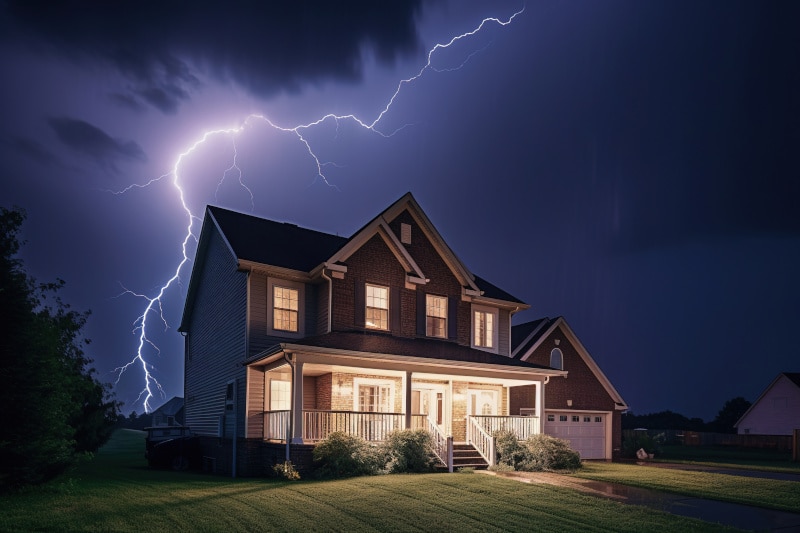
Why Do You Need a Whole House Surge Protector in North Carolina?
 You need a whole house surge protector in Greensboro because the region experiences frequent storms, lightning activity, and grid fluctuations that send damaging voltage spikes into homes, and because everyday internal surges from appliances cycling on and off quietly degrade electronics and HVAC equipment over time. Using a surge protector to cover your whole house is a smart step toward protecting electronics, appliances, and more.
According to Berico’s own electrical team, homes in the Greensboro area experience 14 to 16 power surges every single day. Most of those surges are modest enough that you never notice them, but their cumulative effect on sensitive electronics, HVAC components, and major appliances is real and measurable. A whole house surge protector installed at the main electrical panel intercepts those surges before they reach any of your home’s circuits.
What Does a Whole House Surge Protector Actually Do?
A whole house surge protector is a device installed at your main electrical panel that detects incoming voltage spikes and diverts the excess energy to ground before it can travel through your home’s branch circuits and damage connected equipment.
Your home is protected from sudden voltage spikes when you have a quality whole house surge protector installed. These voltage spikes can come from a variety of causes, including lightning, power grid fluctuations, large appliances turning on and off, and more.
The installation process involves a licensed electrician mounting the surge protection device directly at the main panel, connecting it between the incoming utility power feed and your home’s circuits. This placement is what makes whole-house protection fundamentally different from a power strip. A strip only protects what is plugged directly into it. A panel-mounted device protects every outlet, appliance, and circuit in the entire home simultaneously.
Residential whole house surge protectors are rated in joules, which measures how much surge energy the device can absorb before it needs to be replaced. Quality systems for Greensboro homes are typically rated between 50,000 and 140,000 joules. Higher joule ratings indicate greater capacity to handle more severe events. Berico’s electricians also evaluate the kA (kiloampere) rating of a device, which measures how much surge current it can handle in a single event. A higher kA rating means the device can withstand the intense current spike from a nearby lightning strike without being overwhelmed. Most quality units also include indicator lights that alert you when the device has absorbed significant surges and needs attention.
Why Does Greensboro Have So Many Power Surges?
Greensboro and the surrounding Triad area experience a high frequency of power surges because the region sits in one of the most lightning-active corridors of the eastern U.S., and its extensive above-ground utility infrastructure is vulnerable to storm-related grid disruptions that send voltage spikes into connected homes.
If you have lived in North Carolina for a while, you already know that powerful storms are common in this part of the world. Sure, there are plenty of beautiful sunny days, but when storms roll through, you want to make sure your house is protected and prepared.
During these storms, fluctuations in the power grid are common. Those fluctuations can come from trees falling on power lines, lightning strikes, and more. If the activity from a storm sends a rush of electricity through the grid and into your home, all of your various appliances and electrical devices could be at risk.
Greensboro’s spring and summer storm season runs from roughly April through September, with thunderstorm activity peaking in the summer months. The city’s location in the Piedmont Triad puts it in the path of storm systems that develop over the Appalachians and track east, as well as tropical systems that push inland from the coast. That combination makes above-average surge exposure a year-round reality rather than a seasonal concern.
What Are Overloaded Circuits and How Do They Relate to Surges?
Overloaded circuits occur when the total electrical demand placed on a single circuit exceeds its rated capacity, which can cause breakers to trip, wiring to overheat, and voltage irregularities that stress connected devices in the same way that external surges do.
An overloaded circuit is not the same as a power surge, but the two problems are related. When a circuit is consistently running near or at its capacity limit, the voltage fluctuations that occur as loads cycle on and off are more pronounced. Those fluctuations are a form of internal surge. In older Greensboro homes with electrical panels that were sized for a smaller number of appliances and devices than are in use today, overloaded circuits are a common finding during electrical inspections.
Addressing overloaded circuits, either by redistributing loads, adding circuits, or upgrading the panel, reduces the internal surge activity that whole house protection alone cannot fully counteract. Berico’s licensed electricians can assess panel capacity and circuit loading as part of an electrical evaluation.
Why Whole House Surge Protection Is Worth the Investment
Whole house surge protection is worth the investment because voltage spikes, whether from storms, grid switching, or internal appliance cycles, cause both immediate equipment damage and long-term cumulative degradation that shortens the lifespan of electronics, appliances, and HVAC systems.
You might think that power surges are rare, but that’s not quite the case. In fact, modest power surges happen often, even in calm conditions. Having surge protection in place is valuable for a number of reasons:
- Safeguard electronic devices. You likely rely on these devices for countless purposes each day, including things like TVs, computers, gaming systems, smart devices, and more. These items are particularly at risk of surge damage if they aren’t protected.
- Prevent appliance damage. You can also experience costly damage to things like refrigerators, HVAC systems, and washing machines when a surge comes through. Even the accumulation of small surges over time can lead to problems.
- Stop internal surges. Did you know that not all surges come from the grid? A burst of power can occur when large appliances cycle on and off, and that surge can harm other devices.
Why Your HVAC System Is Especially at Risk from Power Surges
Modern HVAC systems are among the most surge-vulnerable equipment in a home because they contain variable-speed compressors, electronic control boards, and programmable thermostats that cannot tolerate the voltage spikes that older mechanically controlled equipment could survive.
The compressor in a central air conditioning system is one of the largest electrical loads in the home, and it is also one of the most common sources of internal surges. Each time a compressor cycles on, it draws a brief spike of current that travels back through the electrical system. Without protection, that spike reaches every other device on the circuit. With a panel-mounted whole house surge protector in place, that energy is diverted before it can cause harm.
The cost of HVAC surge damage puts the investment in protection into perspective. Replacing a damaged variable-speed heat pump or air handler can cost thousands of dollars. Whole house surge protection installation represents a fraction of that expense and protects not just the HVAC system but every appliance and electronic device in the home at the same time. As Berico’s team notes, a whole house surge protector is specifically recommended to protect HVAC systems, well pumps, air purifiers, computers, televisions, and other sensitive equipment throughout the home.
“In Greensboro, we see surge-related HVAC damage most often after the first major storm of the season, when a nearby lightning strike sends energy through the grid and into control boards that were already being stressed by daily internal surges. What I always tell homeowners is that the panel-mounted device and the surge strip work together. The whole house unit handles the big events at the entry point, and the strip gives the most sensitive electronics a second layer of defense. Neither one alone gives you the full picture.”
Toni Mortera, Electrician, Berico
Does a Whole House Surge Protector Work Against Lightning?
A whole house surge protector provides meaningful protection against the voltage spikes that travel through the electrical system from nearby lightning strikes, but it is not designed to absorb the full energy of a direct lightning strike to the home or its utility service entrance.
Lightning is a different category of event than a standard power surge. A direct strike contains far more energy than any residential surge protective device is rated to handle. However, most lightning-related surge damage does not come from a direct strike to the home. It comes from strikes to nearby trees, utility poles, or the ground that inject energy into the grid and send it toward connected homes. In those scenarios, a whole house surge protector can intercept and divert the surge effectively.
For homeowners concerned about direct lightning risk, a lightning rod system can be added to direct strike energy safely into the ground. That is a separate system from surge protection and addresses a separate threat. The two can work together as complementary layers of protection.
Pair Your Whole House Surge Protector with Point-of-Use Protection
Whole home surge protection works best when you pair it with point-of-use protection tools like standard surge strips. This combination gives you a layered approach to protecting against surges and keeping your things safe. So, even if you have a whole house surge protector in use, it’s still smart to plug in things like computers and other electronics into a surge strip first.
As Berico’s electrical team notes, whole house surge protection is strongly recommended, and a surge protection strip for in-home electronics is also advised because sensitive devices like computers and televisions are particularly vulnerable to even small voltage variations that a panel-mounted device may not fully eliminate. The combination of both layers is the most complete approach available to a homeowner.
Get Help from Berico’s Greensboro Electricians
Hiring the best electrician Greensboro has to offer is the easy way to solve any issues you are facing around your home. Whether you need help with overloaded circuits, want to upgrade your panel, or are ready to invest in whole home surge protection, a call to Berico is the logical first step. Reach out now to learn more.
Berico has served Greensboro and the Triad for more than 100 years. The team’s licensed electricians install whole house surge protection systems, assess panel capacity, and address overloaded circuits as part of a comprehensive electrical evaluation. Whether you are concerned about storm season, want to protect a new HVAC system, or are simply ready to give your home a more complete layer of electrical defense, Berico is ready to help.
Frequently Asked Questions About Whole House Surge Protection
Does a whole house surge protector really work?
Yes. A whole house surge protector installed at the main electrical panel intercepts voltage spikes before they enter any branch circuit in the home. It is more comprehensive than individual power strips because it protects every outlet, appliance, and hardwired device simultaneously. For maximum protection, pair the panel-mounted device with surge strips for sensitive electronics like computers and televisions.
What is the difference between a whole house surge protector and a power strip?
A whole house surge protector is installed at the main electrical panel and protects every circuit in the home from surges entering through the utility service. A power strip only protects devices plugged directly into it and provides no protection for hardwired appliances, HVAC systems, or outlets elsewhere in the home. The two work best used together as complementary layers of protection.
How many joules do I need for whole house surge protection?
Residential whole house surge protectors are typically rated between 50,000 and 140,000 joules. Higher joule ratings indicate a greater capacity to absorb severe surge events before the device needs to be replaced. A licensed electrician can recommend the appropriate rating based on your home’s equipment, location, and exposure to storm activity.
Does homeowners insurance cover surge damage?
Some homeowners insurance policies cover surge damage caused by lightning strikes, but coverage for other types of surges, such as grid fluctuations or internal appliance surges, varies widely by policy. Review your policy details with your insurance provider. Regardless of coverage, whole house surge protection is a proactive investment that prevents damage from occurring rather than compensating for it afterward.