
Tips on Choosing the Right Propane Supplier
 If you’re a new propane user or you’re thinking of switching, choosing a supplier is an important decision. Not all suppliers offer the same level of service and the same options. You are not obligated to use the company whose name is on your tank. In most areas, there are a variety of suppliers to choose from. Before deciding on a propane supplier in Eden, consider these tips.
Look for a Supplier who offers Automatic Deliveries (and Furnace Maintenance as a Bonus)
Do you want to have to keep tabs on the propane level in your tank, or would you rather let your supplier handle that? Most customers would choose a supplier who will calculate your propane usage and time your automatic deliveries accordingly. Running out of propane is not only inconvenient, but it requires additional maintenance upon refilling the tank. When a tank gets completely empty the pressurization can get out of whack and leaks can easily occur at the time of refill. And if your tank runs out on a cold day, it will take even longer to get your home warm again. It’s also beneficial to find a company that offers furnace maintenance with deliveries so that you can have one company handle all of your home heating needs (and perhaps even your cooling needs as well).
Find a Reliable Supplier with a Good Reputation and Safety Rating
Ask friends and neighbors what supplier they use and if they are satisfied with their service. Check the status of any company you’re considering with the Better Business Bureau. Read online reviews (not just the ones posted on the company’s website). Check to make sure the supplier is licensed in the state where they do business. Look up their safety ratings as well through the BBB to be sure you’re choosing a reliable company.
Ask about Fees and Pricing and get all the Details Before Signing any Contracts
Many propane suppliers will avoid mentioning the fees they charge for certain services or the cancellation of services. Initial pricing may also be promotional and your price for later refills could be much higher. Ask questions and get everything in writing before signing up for propane deliveries with any company. Make sure you understand all of the rules and fine print. Don’t work with a company that is not forthcoming about any aspect of their services.
Carolina Fuels is a Propane Supplier you can Trust
When you look up Carolina Fuels through the Better Business Bureau, you will find an A+ accreditation for customer service and safety. Ask around the community and you’ll hear nothing but positive things. When you speak with a representative at Carolina Fuels you’ll get all the information you need up front, no mystery. Comfort and Protection Service Plans are available that combine your propane deliveries and HVAC system maintenance in one convenient package that saves you money and offers benefits like discounts on propane and repairs. Make Carolina Fuels your propane supplier of choice today: (336) 623-9741.
 A propane gas leak is a very serious matter, and should not be taken lightly. While propane is a safe fuel that only burns at very high temperatures, a leak could lead to a high concentration of gas in a certain area and a spark could cause it to ignite. If you smell gas or suspect a leak for any reason, your
  It should come as no surprise that the temperature outside affects your air conditioner’s performance. The weather outside is the reason you have an air conditioning system in the first place. While the weather can affect your AC in a variety of ways, the best way to keep your system operating properly is to schedule professional
  You probably know that springtime is one of the worst times of the year for allergies. With all of the extra pollen in the air from trees, plants, and flowers it can be an allergy sufferer’s nightmare. But what you may not know is that the top culprit for spreading allergens around your home is your HVAC system. Allergens like pollen, dust, pet dander, and more can get through your AC filters and into your ducts. Those allergens are then blown out through your vents to contaminate your indoor air. However, there are ways to prevent the spread of allergens through your HVAC system. These suggestions will also improve your HVAC efficiency and delay the need for
  Is it necessary to have your air ducts cleaned? It may not be necessary, but it is certainly beneficial. If you have a central HVAC (heating, ventilation, and air conditioning) system, your home has a series of ducts that lead from your air conditioner to the vents throughout your home. Over time dust, dirt, pet dander, and other debris will accumulate in your ducts, contaminating your indoor air and causing your HVAC system to run less efficiently or possibly even malfunction. If your
 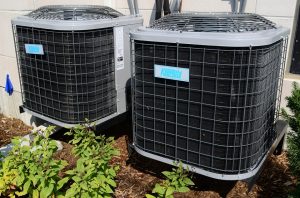 How do you know when you need a new air conditioner? The fact that you’re wondering is probably a strong indicator that it may be time. Before you start looking for HVAC companies who handle
  Your AC is a large appliance that is responsible for as much as half of your home’s total electricity usage during the warm weather months. To keep it working properly you will occasionally have need of an
  Is it time for a new air conditioner? Whether your old system has died or you’re building a new home that needs its first system, there are some important things to take into consideration. Before you schedule
  The warm weather season
  Did you know that your furry, 4 legged friends can affect your HVAC system? If you have pets in your home there are some extra maintenance steps you should take regularly to keep your heating and cooling system from being affected by your furry family members. Avoid frequent